

Table of Contents
The Experience Catch-22 Every New Grant Writer Faces
Traditional Paths to Getting Experience
A Fresh Approach: Learn Grant Writing by Reviewing Proposals
What Is the Unfunded List?
Why Reviewing Proposals Makes You a Better Grant Writer
How to Get Started
FAQ
Your Next Step
The Experience Catch-22 Every New Grant Writer Faces
If you've ever searched for grant writing jobs, you've likely noticed the frustrating pattern: nearly every position requires three to four years of experience. But how are you supposed to get experience if no one will hire you without it?
This is the question I hear most often from my students. They've completed their grant writing training, earned their Certificate in Grant Writing, and they're ready to launch their careers. But that experience requirement feels like a locked door with no key in sight.
The good news? There are more ways around this barrier than you might think. And today, I want to share several approaches—including one that might actually be enjoyable rather than feeling like unpaid labor.
Traditional Paths to Getting Grant Writing Experience
Let's start with the paths that already exist. Some of these you've probably heard before, but a few might be new to you. Each has its own advantages and drawbacks, and the right choice depends on your current situation, schedule, and career goals.
Volunteering for Nonprofits to write grants
This is the advice most people give when you ask how to get grant writing experience, and for good reason—it works. The basic approach involves reaching out to small nonprofit organizations, offering to write a grant or two pro bono, and using those completed proposals to build your portfolio.
How it works: You identify a nonprofit whose mission resonates with you, reach out to its executive director or development staff, and offer your services. Ideally, you'll find an organization that has identified funders they want to approach but lacks the capacity to write the proposals themselves. You write the grant, they submit it, and you gain a work sample for your portfolio.
The pros: This path gives you real-world experience writing complete proposals from start to finish. You'll navigate the full process—gathering information from program staff, researching the funder, drafting and revising, and meeting a deadline. If the grant gets funded, you have a compelling success story to share with future employers or clients. You're also building relationships in the nonprofit community, which can lead to paid opportunities down the road.
The cons: This can feel like taking on a second unpaid job, especially when you're already working full-time. Finding the right organization takes effort—you need one that's organized enough to provide you with the information you need but under-resourced enough to genuinely need your help. Some volunteers find themselves chasing down program managers for budget details or waiting weeks for feedback on drafts. The timeline can stretch far longer than anticipated, and if the organization is disorganized, the experience can be frustrating rather than educational.
Resume value: High, especially if you can show funded proposals. Employers and clients want to see that you've written real grants for real organizations. Even unfunded proposals demonstrate your ability to complete the work. Be prepared to discuss what you learned from the experience and how you'd approach things differently next time.
Landing a Position with a Grant Writing Firm That Trains New grant Writers
Some grant writing firms genuinely invest in developing talent from the ground up. Rather than requiring years of experience, they hire promising candidates and provide mentorship, feedback, and gradually increasing responsibility.
How it works: You research grant writing firms in your area or those that work remotely, looking specifically for those with a reputation for training new writers. You apply, interview, and if hired, you typically start with smaller tasks—research, editing, drafting sections of proposals—before taking on full proposals independently. The firm provides oversight, feedback, and quality control while you learn.
The pros: You get paid while you learn. You benefit from structured mentorship and feedback from experienced professionals. You see how a successful grant writing operation runs, learning not just the writing but also client management, project workflow, and business practices. The experience is legitimate employment, not volunteer work, which carries weight on your resume. And you're building professional relationships that can support your career for years to come.
The cons: These positions can be competitive. Firms that invest in training new writers are desirable employers, so you may be up against other candidates with similar qualifications. The pay for entry-level positions may be modest. And not every firm that claims to train new writers actually provides meaningful mentorship—some simply expect you to figure it out on your own while billing clients for your time.
Resume value: Very high. Paid employment at a grant writing firm signals to future employers and clients that someone was willing to stake their reputation and client relationships on your work. It's concrete, verifiable experience that's difficult to question.
How to find these firms: This is exactly why we created our Inside Grant Writing Businesses webinars, held on the first Thursday of each month at 10 am Central Time. Each webinar features a panel of grant-writing firm owners who share how they run their businesses, including how they hire and train new grant writers. You'll hear directly from these firm owners about what they look for in candidates, how they onboard new team members, and whether they're currently hiring. It's the best way to identify firms that genuinely invest in developing new talent versus those that expect you to arrive fully formed. BUTTON [Link to upcoming webinars https://sparkthefiregrantwriting.com/webinars]
Serving on Grant Review Panels for Funders
Many foundations and government agencies recruit community members and professionals to serve on their review panels. This experience puts you on the other side of the table, showing you exactly how funders evaluate proposals and make funding decisions.
How it works: Funders recruit reviewers through various channels—professional associations, community networks, or open calls on their websites. Once selected, you receive training on the funder's priorities and scoring criteria. You're then assigned a set of proposals to review independently, scoring them against the rubric and providing written comments. Many panels also include group discussions where reviewers debate scores and reach consensus on funding recommendations.
The pros: This is arguably the most valuable experience you can gain for understanding what makes proposals succeed or fail. You see dozens of proposals side by side, which quickly reveals patterns—what makes some applications stand out while others fall flat. You learn the specific language and priorities of funders in a way that's impossible to grasp from the outside. You also build relationships with funder staff and fellow reviewers, expanding your professional network.
The cons: These opportunities can be competitive, especially for well-known funders. Government review panels often have specific eligibility requirements—some prefer reviewers from certain geographic areas, professional backgrounds, or demographic groups. The time commitment during review periods can be intense, with tight deadlines for reading and scoring multiple lengthy proposals. And some panels offer only modest stipends or no compensation at all.
Resume value: Extremely high. Being selected as a grant reviewer signals that a funder trusted your judgment to help allocate their resources. It demonstrates insider knowledge of the funding process that most grant writers lack. In interviews, you can speak with authority about what reviewers actually look for because you've been one.
How to find these opportunities: Check with your local community foundation, state arts council, or government agencies that administer federal pass-through funding. Many post reviewer recruitment notices on their websites. Professional associations like the Grant Professionals Association sometimes share these opportunities with members. Once you've served on one panel, you're often invited back or referred to other funders seeking reviewers.
Writing Grants for Your Own Employer
If you're currently working at a nonprofit in a non-grant-writing role, you might already be sitting on an opportunity to build experience without changing jobs.
How it works: You approach your supervisor or executive director and express interest in taking on grant writing responsibilities. This might mean writing a proposal for a small foundation grant, assisting the development director with a larger application, or taking ownership of a recurring grant that comes up for renewal. You incorporate grant writing into your existing role, either formally by changing your job description or informally as a special project.
The pros: You get paid your regular salary while building grant writing experience. You already understand the organization's programs, budget, and culture, which eliminates the learning curve that volunteers face. You have built-in access to program staff and financial information. If your proposals get funded, you're directly contributing to your organization's success, which can lead to recognition, raises, or promotions. And you can speak to this experience as paid employment, not volunteer work.
The cons: Not every employer will say yes. Some may worry about pulling you away from your primary responsibilities. Others may have existing staff who handle grants and don't want to share the territory. The quality of mentorship varies—if no one in your organization has strong grant writing skills, you may be learning through trial and error rather than guidance. And if your organization has a troubled relationship with funders or a weak track record, it may be harder to achieve funding success.
Resume value: High. This is paid professional experience within an organization, which employers respect. You can point to specific grants you wrote, dollars raised, and programs funded. The experience also demonstrates initiative—you identified a need and stepped up to fill it.
How to approach the conversation: Frame your request around organizational benefit, not just your own career development. Come prepared with specific grant opportunities you've identified, a realistic timeline, and a plan for balancing grant writing with your current duties. Offer to start small with a single proposal before taking on more.
Subcontracting with Established Grant Writers
Some experienced grant writers take on more work than they can handle and look for trained writers to assist with various tasks. This arrangement lets you learn from a mentor while building your portfolio.
How it works: You connect with established freelance grant writers or small firms and offer to assist with their overflow work. This might include conducting prospect research, gathering data for needs statements, drafting sections of proposals, editing and proofreading, or formatting final submissions. As trust builds, you may take on larger portions of proposals or eventually full projects under the lead writer's supervision.
The pros: You learn directly from someone who's already successful in the field. You see how experienced professionals approach projects, manage client relationships, and solve problems. The work is often paid, even if at a lower rate than you'd earn independently. You build a relationship with someone who can refer clients to you, provide references, and offer ongoing mentorship. And you gain work samples without having to find your own clients.
The cons: Finding these opportunities requires networking and relationship-building—established writers won't hire you if they don't know you exist. The pay for subcontract work may be modest, especially when you're starting out. The work may be behind the scenes, meaning you can't always claim public credit for proposals you helped write. And quality varies—some lead writers are generous mentors while others simply want cheap labor.
Resume value: Moderate to high, depending on how you frame it. You can describe the types of proposals you worked on, the role you played, and the outcomes. Be honest about your level of contribution—saying you "assisted with" a proposal is different from saying you "wrote" it. If the lead writer is willing to serve as a reference, that adds significant credibility.
How to find these opportunities: Attend conferences and professional association meetings where grant writers gather. Join online communities and LinkedIn groups for grant professionals. Reach out directly to freelancers whose work you admire, introducing yourself and expressing interest in supporting their projects. The Grant Professionals Association is an excellent network for making these connections.
Pro Bono grant writing Work Through Organized Programs
Organizations like Catchafire and VolunteerMatch connect skilled volunteers with nonprofits seeking specific help, including grant writing. These platforms remove some of the friction from traditional volunteering by handling the matching process.
How it works: You create a profile on the platform, listing your skills and availability. Nonprofits post projects they need help with, including grant writing. The platform matches you with opportunities that fit your profile, or you browse and apply to projects that interest you. Once matched, you work directly with the nonprofit to complete the project within a defined scope and timeline.
The pros: The matching process is streamlined—you don't have to cold-call dozens of nonprofits hoping to find one that needs help. Projects are typically scoped with clear deliverables and timelines, which helps prevent the indefinite commitment creep that can happen with informal volunteering. The platforms often provide structure and accountability that benefits both volunteers and nonprofits. You can browse opportunities from anywhere, making it possible to find projects that match your interests even if local options are limited.
The cons: Popular opportunities can be competitive, with multiple volunteers applying for the same project. The scope defined on the platform may not match reality once you start working with the nonprofit. And because these platforms serve many types of skill-based volunteering, the volume of grant writing opportunities specifically may be limited depending on when you're looking.
Resume value: Moderate to high. Completing projects through these platforms demonstrates your ability to deliver results in a professional context. You can describe the projects, the organizations you helped, and the outcomes. Some platforms provide verification or badges that confirm your completed work.
Which platforms to try: Catchafire is specifically designed for skill-based volunteering and has a strong focus on nonprofit capacity building. VolunteerMatch is a broader platform with a wider range of opportunities. Taproot Foundation is another option that connects professionals with pro bono consulting projects, though grant writing opportunities may be less frequent.
Internal Grants at Your Workplace
Some large employers—including hospitals, universities, government agencies, and corporations—have internal grant programs or mini-grant competitions. Writing applications for these internal funding opportunities can build your skills in a lower-stakes environment.
How it works: Your employer allocates funding for internal projects and invites employees or departments to apply. These might be innovation grants, professional development funds, community engagement projects, or research seed funding. You write an application following the internal guidelines, your proposal is reviewed by a committee, and funding is awarded to selected projects.
The pros: The stakes are lower than external grant writing. You're working within a familiar environment with colleagues who can provide feedback and guidance. The application process often mirrors external grantmaking, giving you practice with needs statements, objectives, budgets, and evaluation plans. If your proposal is funded, you have a success story to share. And you're demonstrating initiative and leadership to your employer.
The cons: Not all employers have these programs. Internal grants are typically smaller in scope than external foundation or government grants, so the experience may not fully translate. The competition may be internal rather than open, which provides less insight into how external funders evaluate proposals. And the process may be less rigorous than external grantmaking, offering fewer learning opportunities.
Resume value: Moderate. This experience shows initiative and basic grant writing competence, but employers evaluating your candidacy for grant writing positions will likely want to see external grants as well. Frame internal grants as part of your learning journey rather than the entirety of your experience.
How to find these opportunities: Check your employer's intranet for funding announcements. Talk to colleagues in research administration, employee engagement, or corporate social responsibility departments. If your employer doesn't have formal internal grants, there may still be discretionary funds that managers can allocate—making a compelling case for a project you want to pursue is grant writing practice in itself.
Writing Grants for Your Local School or Fire Department
Sometimes the best place to start building experience is right in your own community. Local schools and fire departments frequently need grant funding but often lack dedicated staff to pursue it. These grants tend to be smaller and more straightforward than complex federal applications, making them ideal for new grant writers looking to build confidence and rack up some early wins.
How it works: You reach out to a local school principal, teacher, or fire chief and offer to help them apply for grants. For schools, this might mean helping an individual teacher apply for a classroom grant from organizations such as the American Association of Educators Classroom Grants, Fund for Teachers, the American Association of School Librarians Innovative Reading Grant, Dollar General Summer Literacy Grant, DonorsChoose, or local education foundations. For fire departments, you might pursue equipment grants from FEMA's Assistance to Firefighters Grant Program, Firehouse Subs Public Safety Foundation, or state-level emergency services funding. You gather the necessary information, write the proposal, and support them through submission.
The pros: These grants often have simpler applications and shorter turnaround times than large foundation or government grants, so you can complete projects quickly and see results faster. You may have a personal connection to the outcome—if your kids attend the school or you live in the fire district, you directly benefit from the funded programs. Teachers and fire chiefs are often deeply grateful for the help, which can lead to enthusiastic references and word-of-mouth referrals. And because these are real grants with real funding attached, any wins go straight into your portfolio as concrete evidence of your abilities.
The cons: The grant amounts are typically smaller, so you won't be able to claim you've secured six-figure funding through this path alone. Some school districts have policies about who can submit grants on their behalf, so you may need to navigate bureaucratic approval. And while the applications are simpler, you'll still need access to information like budgets, program descriptions, and organizational data, which requires cooperation from busy educators or first responders.
Resume value: Moderate to high for entry-level positions. Funded classroom or equipment grants demonstrate that you can identify opportunities, write winning proposals, and deliver results. Employers understand that everyone starts somewhere, and showing initiative in your own community reflects well on your character and commitment. As you build experience, these early wins become part of a larger story of growth.
How to get started: If you have children in school, start by talking to their teachers about whether they've considered applying for classroom grants. Many teachers know these opportunities exist, but don't have time to pursue them. For fire departments, contact your local station and ask to speak with whoever handles grants or administrative matters—in smaller departments, this is often the fire chief directly. Come prepared with a few specific grant opportunities you've researched so they can see you're serious and informed.
But here's an option that combines the accessibility of volunteering with a genuinely engaging learning experience—one that feels less like unpaid work and more like professional development.
A Fresh Approach: Learn Grant Writing by Reviewing Proposals
What if instead of writing grants for free, you could learn by reviewing them?
Think about it. When you review someone else's proposal, you see what works and what doesn't. You notice where the narrative loses momentum, where the budget doesn't quite align with the activities, and where the need statement falls flat. You develop the critical eye that separates competent grant writers from exceptional ones.
This is exactly the opportunity that the Unfunded List provides.
What Is the Unfunded List?
The Unfunded List is a 501(c)(3) organization that has been providing constructive feedback to grantseekers since 2015. They've reviewed more than 1,500 proposals from organizations around the world, helping nonprofits strengthen their applications and increase their fundraising success.
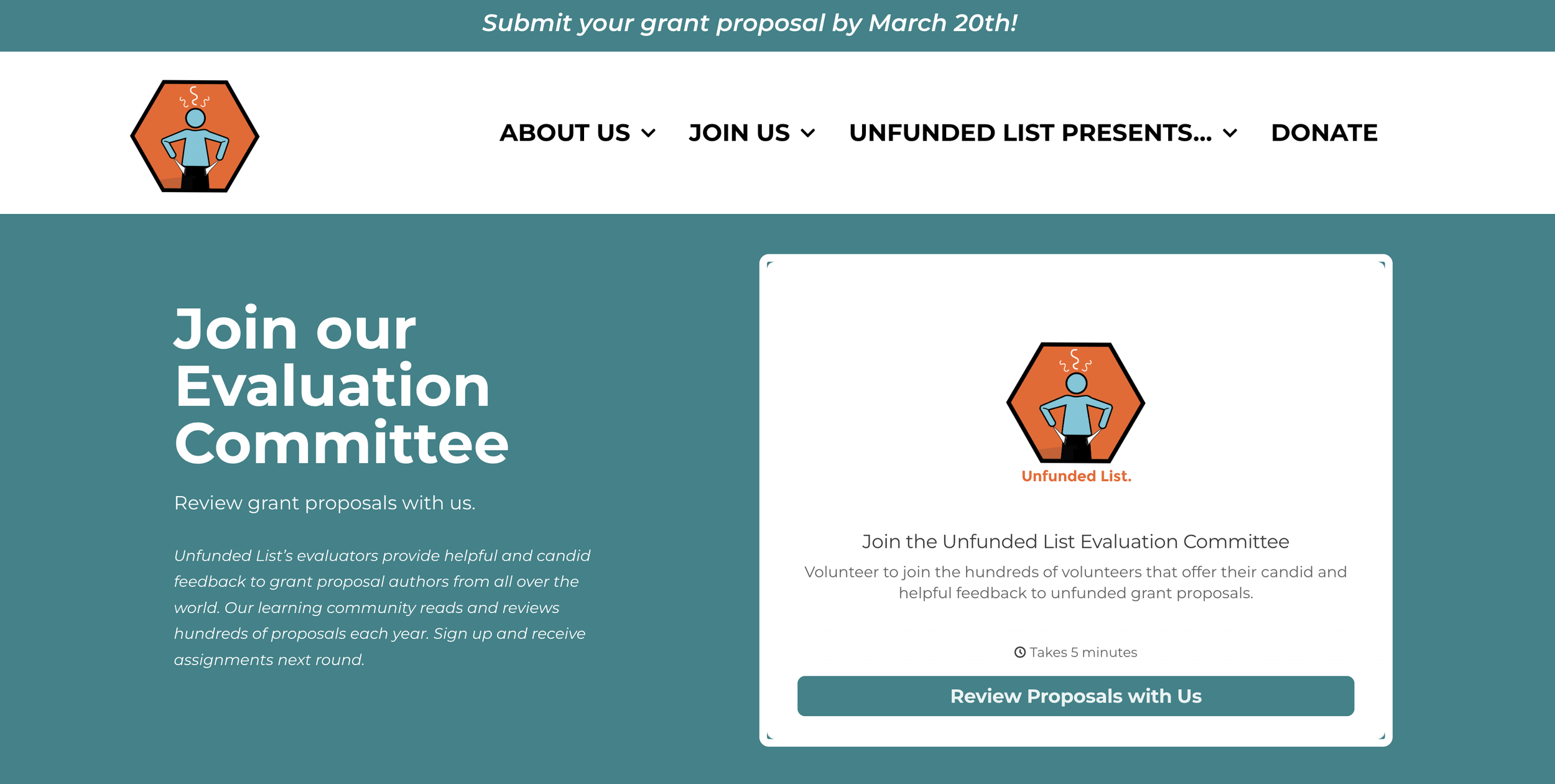
Here's a statistic that caught my attention: nonprofits that go through their review program raise over twice as much funding within five years on average. That tells me the feedback they provide is substantive and actionable.
The organization relies on volunteer reviewers to make this work happen. And that's where the opportunity lies for aspiring grant writers.
Why Reviewing Grant Proposals Makes You a Better Grant Writer
When you volunteer as a proposal reviewer with the Unfunded List, you're not just padding your resume. You're developing skills that will serve you throughout your grant writing career.
You learn to identify weak spots
Reading proposals with a critical eye trains you to recognize common mistakes, from vague objectives to unsupported budget line items. Once you can spot these issues in others' work, you become better at avoiding them in your own.
You see a variety of grant writing approaches
Reviewing multiple proposals exposes you to different writing styles, organizational structures, and ways of presenting information. This breadth of exposure accelerates your learning far beyond what you'd gain from writing one or two proposals on your own.
You practice giving constructive feedback
The ability to articulate what's working and what needs improvement is valuable whether you're reviewing a colleague's draft, responding to funder feedback, or mentoring new grant writers down the road.
You build legitimate grant writing experience
When you can tell a potential employer or client that you've reviewed dozens of real grant proposals, you demonstrate both knowledge and commitment to the field.
You contribute to something meaningful
Unlike some volunteer opportunities that feel like busywork, helping organizations improve their proposals has real impact. Better proposals mean more funded programs, which in turn mean more communities served.
How to Get Started
Getting involved with the Unfunded List is straightforward.
To volunteer as a proposal reviewer, sign up here:
If you have questions or want to learn more, you can reach out to Dave Moss directly through their website.
FAQ
What is the best way to learn how to write grants before I start getting experience?
Enroll in the Spark the Fire Certificate in Grant Writing course, rated as the top grant writing education program in the nation for four consecutive years. You'll build a strong foundation in grant writing fundamentals so you can approach any of these experience-building paths with confidence.
Do I need grant writing experience to volunteer as a reviewer?
The Unfunded List welcomes reviewers at various experience levels. The key is a willingness to provide thoughtful, constructive feedback. If you've completed grant writing training and understand the fundamentals of what makes a strong proposal, you have enough foundation to contribute meaningfully.
How much time does reviewing grant proposals require?
Time commitments vary depending on the review round and how many proposals you choose to review. The organization works with volunteers to find a level of involvement that fits their schedules.
Will this count as professional grant writing experience on my resume?
Yes. Volunteer experience is legitimate experience, especially when it involves substantive work like reviewing grant proposals. You can list this on your resume and speak to it in interviews, describing what you learned and how many proposals you reviewed.
Is this only for people who want to become grant writers?
Not at all. Nonprofit staff who submit grant applications can also benefit from understanding what reviewers look for. Development directors, program managers, and executive directors would all gain valuable perspective from this experience.
How is this different from serving on a grant review panel for a funder?
Funder review panels are excellent experience but can be competitive to join and may have specific eligibility requirements. The Unfunded List offers a more accessible entry point, though the learning benefits are similar.
Can I do this while working full-time?
Absolutely. Many volunteers balance reviewing with other professional commitments. Because you're reviewing proposals rather than writing them, you have more flexibility in when and how you complete the work.
Your Next Step
Building grant writing experience doesn't have to mean years of unpaid labor or waiting for the perfect job to materialize. Whether you subcontract with an established writer, propose taking on grants at your current job, or volunteer as a reviewer with the Unfunded List, there are paths forward that fit different schedules and circumstances.
If you're ready to take action, sign up to volunteer as a reviewer today. And if you want to explore the firm route, join us for our next Inside Grant Writing webinar on the first Thursday of the month, where you'll hear directly from firm owners about what they look for when hiring new grant writers.
About the Author
Allison Welch, M.Ed., GPC, is a grant writing educator with 25+ years of experience and one of only ~30 trainers nationally approved by the Grant Professionals Certification Institute. She is the founder of Spark the Fire Grant Writing, creator of the Certificate in Grant Writing program, and author of the forthcoming book The "Of Course" Factor: A Guide to Meaningful Grant Writing (October 2026).
Your Turn! Reply and Comment
👉 Now I'm curious—what's been your biggest challenge in gaining grant writing experience? Have you tried any of these paths, and if so, what worked or didn't work for you? Share your experience in the comments below.
Want more grant writing tips delivered to your inbox? Subscribe to the Spark the Fire Newsletter.