grant professional resources

Top Grant Writing and Nonprofit Blogs to Follow in 2026

 
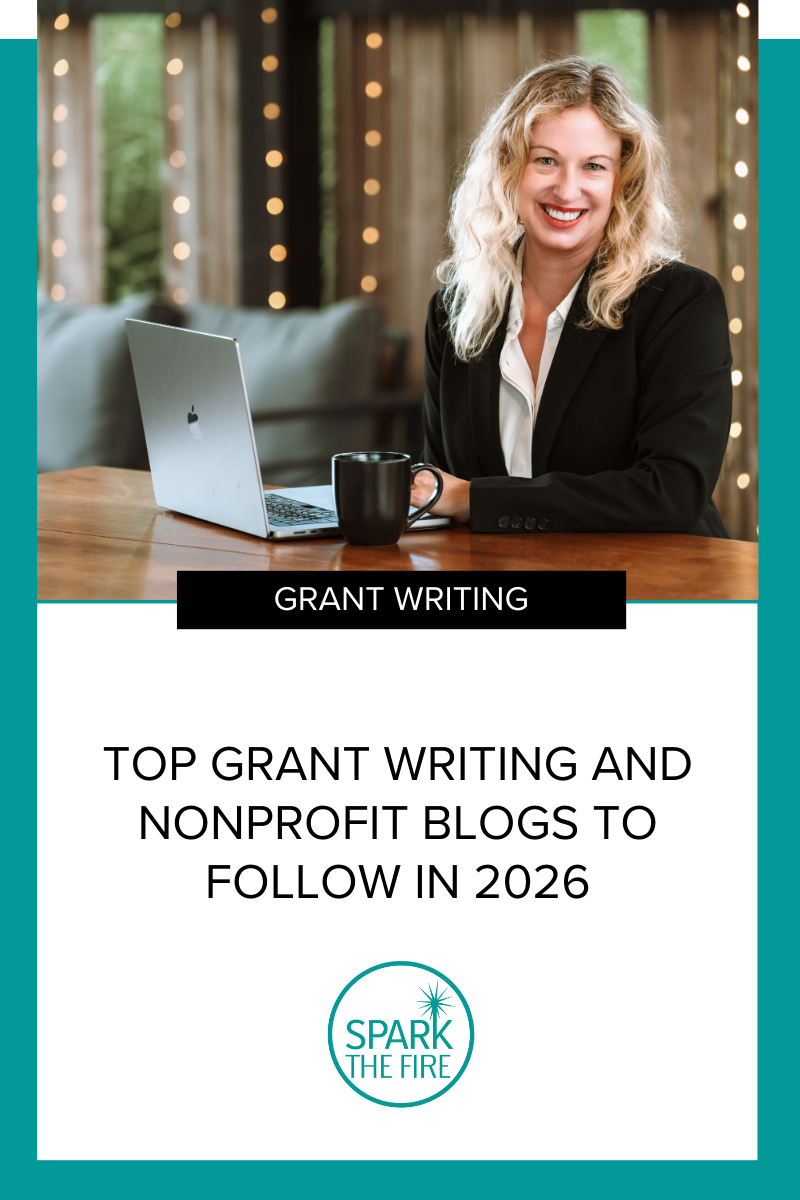
Allison Jones smiling while sitting at her laptop, inviting readers to explore the Best Grant Writing Blogs of 2026.
 

At Spark the Fire, I believe that great grant writers are lifelong learners. Whether you’re building your consulting business, applying for federal funding, or just getting started, staying inspired and informed is part of the journey.

This year’s list looks a little different from past versions. I reviewed every blog from the 2025 list and removed any that had not published at least four new articles in 2025. A surprising number had gone silent this year or even disappeared completely when I clicked their links. Since consistency matters — both for learning and for thought leadership — I only included blogs that remained active, relevant, and updated.

The result is a fresh, high-quality list of grant writing and nonprofit blogs that continue to publish meaningful content. These writers are trusted educators, thought leaders, and practitioners who share the same mission I do: helping you secure funding for causes that matter.

Below are my favorite blogs to follow in 2026, along with why I think they’re worth your time.

  • Spark the Fire – Our very own hub for weekly tips, grant writing templates, examples, and encouragement for purpose-driven grant writers. I write pieces that challenge assumptions in our field — thought-provoking, sometimes a little contrarian, and always rooted in the idea that meaningful work matters more than hustle. If you like smart think pieces about how to do this work with integrity and clarity, you’ll feel right at home here. If reading our think pieces sparks a desire to grow your skills even further, explore our Certificate in Grant Writing course — it’s where everything comes together in a guided, supported way.

  • 1832 Communications – Authored by Ephriam Gopin, this blog focuses on clear messaging and nonprofit donor communication. Some posts speak directly to grant writing. I appreciate how practical and accessible Ephriam’s writing always is.

  • Candid Blog – This is where I go for nonprofit funding trends and data. I especially enjoyed this recent article on whether U.S. Foundations will soon be using AI to review grant applications. If you want help finding the right funders for your organization, my guide on how to conduct smart, efficient prospect research is a great place to start.

  • Center for Effective Philanthropy (CEP) Blog – If you want to know what foundations are reading, read this blog. It covers funder-grantee relationships, strategy, evaluation, and impact. I find it incredibly grounding for understanding the funder perspective.

  • CharityHowTo – A blend of articles for every stage of your grant career. I liked this article written by fellow GPC, Diane Leonard. Clear, actionable, and always technically strong.

  • DH Leonard Consulting Blog – This team publishes consistently helpful posts on writing stronger proposals, federal readiness, and proposal reviews. Their motto is “don’t let grants stress you out,” and I think most of us can get behind that.

  • EUNA Solutions – This blog takes a tech-forward look at public sector grants. I appreciated a recent article about preparing for increased government oversight in 2026. I appreciated a recent artible about preparing for increased government oversight in 2026.

  • Foundant: GrantHub Blog – Foundant’s articles often focus on grant management, systems, and the foundation side of philanthropy. I always find it valuable to read what funders are being taught — it sharpens your own strategy when you understand how they think. I’m still missing Tammy Tilzey heading up their webinars, but the written content continues to be strong. A recent article recommending that foundations use AI to find similar grantees was especially interesting from a grant writer’s perspective. If you’re exploring how AI is shaping our field, you might also enjoy my AI & Grant Writing mini-series, where I break down practical, ethical ways to use AI tools.

  • Funding for Good – My friend Mandy Pearce and her team publish excellent articles on nonprofit strategy, capacity building, and consulting today. I particularly liked a recent piece about improving your consulting website. If you want even more behind-the-scenes insight into the world of grant writing firms, check out the Inside Grant Writing Businesses series — the conversations are smart, practical, and sometimes delightfully surprising.

  • Fundraising HayDay – I met this dynamic duo at the GPA Conference this year and became an even bigger fan. Their podcast-inspired writing offers smart, timely insights on teams, writing, deadlines, and the realities of grant work.

  • Grant Professionals Association – Industry updates, tools, and ethical guidance from the leading professional association. You can also find my guest blog here about grant prospect database taxonomy. You can also find my guest blog on grant prospect database taxonomy.

  • Instrumentl Blog – From the best grant prospect research database on the market comes one of the most trusted grant writing blogs online. I enjoyed Karen Lee’s article on general operating grant, and you’ll find several of my articles featured here too.

  • Just Write Grants – Melanie Lambert writes directly to executive directors and nonprofit leaders. Her recent article on maximizing year-end momentum in your proposals was especially energizing. This article on maximizing the year-end in your grant proposals fired me up.

  • GrantsPlus – A meaty blog with smart takes on capacity building and organizational readiness. This article entitled “Why You’re Losing Your Grant Writer and What to Do About It.” made me laugh and nod along.

  • Grant Seeker’s Edge – A newer LinkedIn-based blog focused on general fundraising. It currently has 18 issues and is steadily growing. There’s good practical insight here if you want short, digestible content.

  • GS Insights – GrantStation’s weekly, practical tips for finding and evaluating funders.

  • Millionaire Grant Lady – his monthly blog covers topics that most others don’t touch. I liked a recent article demystifying myths about faith-based organizations getting grants. Hint: they do.

  • MyFedTrainer – Consistent guidance on compliance, federal requirements, and managing complex federal awards.

  • Nonprofit AF – Vu Le serves up bold, honest, funny reflections on nonprofit life, leadership, and equity. It’s not a grant writing blog specifically, but it’s essential reading for nonprofit thinkers.

  • PEAK Grantmaking Blog - This is another “what funders are reading” resource. Articles focus on equity, transparency, and philanthropic best practice. If you’re exploring how AI is shaping our field, you might also enjoy my AI & Grant Writing mini-series, where I break down practical, ethical ways to use AI tools.

  • Philanthropy Today – Produced by the Chronicle of Philanthropy, this is like the New York Times of nonprofit news and analysis.

  • Seliger + Associates – A bit of a contrarian, tell-all style focused on federal grants. Their recent article questioning whether the “84 banned words” list is an urban legend made me think.

  • Think and Ink Grants – Equity focused strategies, business growth advice, and practical writing guidance for consultants and nonprofit leaders.

  • Write Epic Grants – I saved the best for last. This is a daily blog, which is impressive enough, but the real value is how fresh and creative each entry is. I love receiving these short, energizing tips every day.

Frequently Asked Questions

What makes a grant writing blog worth following in 2026?

Look for blogs that offer practical advice, current examples, and strategic thinking. The best ones help you understand funder expectations, improve your writing, and stay ahead of sector trends like AI, federal oversight, and trust-based philanthropy.

 How can these blogs help me become a stronger grant writer?

They give you access to expert thinking, proposal strategies, prospect research tips, and real-world case studies. Reading widely helps you refine your voice, think more strategically, and write proposals that resonate with funders.

 Are these blogs helpful for both nonprofit staff and freelancers?

Absolutely. Whether you’re an in-house grant writer, a consultant building your business, or an executive director writing proposals yourself, these resources offer insights that apply across roles.

 How do I keep up with new grant writing trends?

 Subscribe to a mix of blogs on this list, follow sector leaders on LinkedIn, attend webinars, and stay engaged with professional associations. The field evolves quickly, especially with emerging AI tools and shifting funder priorities.

Which blog should I start with if I'm brand new to grant writing?

Start with Spark the Fire, Instrumentl, Funding for Good, and DH Leonard Consulting. They offer clear, accessible guidance you can use right away.


Final Thoughts

There is no one right way to learn grant writing, and no single source has all the answers. The magic comes from surrounding yourself with teachers, peers, and thinkers who challenge you, inspire you, and remind you why this work matters.

If you have a favorite blog that isn’t listed here, share it in the comments. We love discovering new voices in the field. Also, if you want curated grant writing insights delivered each week, join my newsletter — it’s where I share trends, tips, and tools I don’t post anywhere else. Ready to take your skills further? Explore Spark the Fire’s Certificate in Grant Writing Course for 2026. 
Grant Prospecting Software Innovations for 2026: What's New at the Leading Databases

 
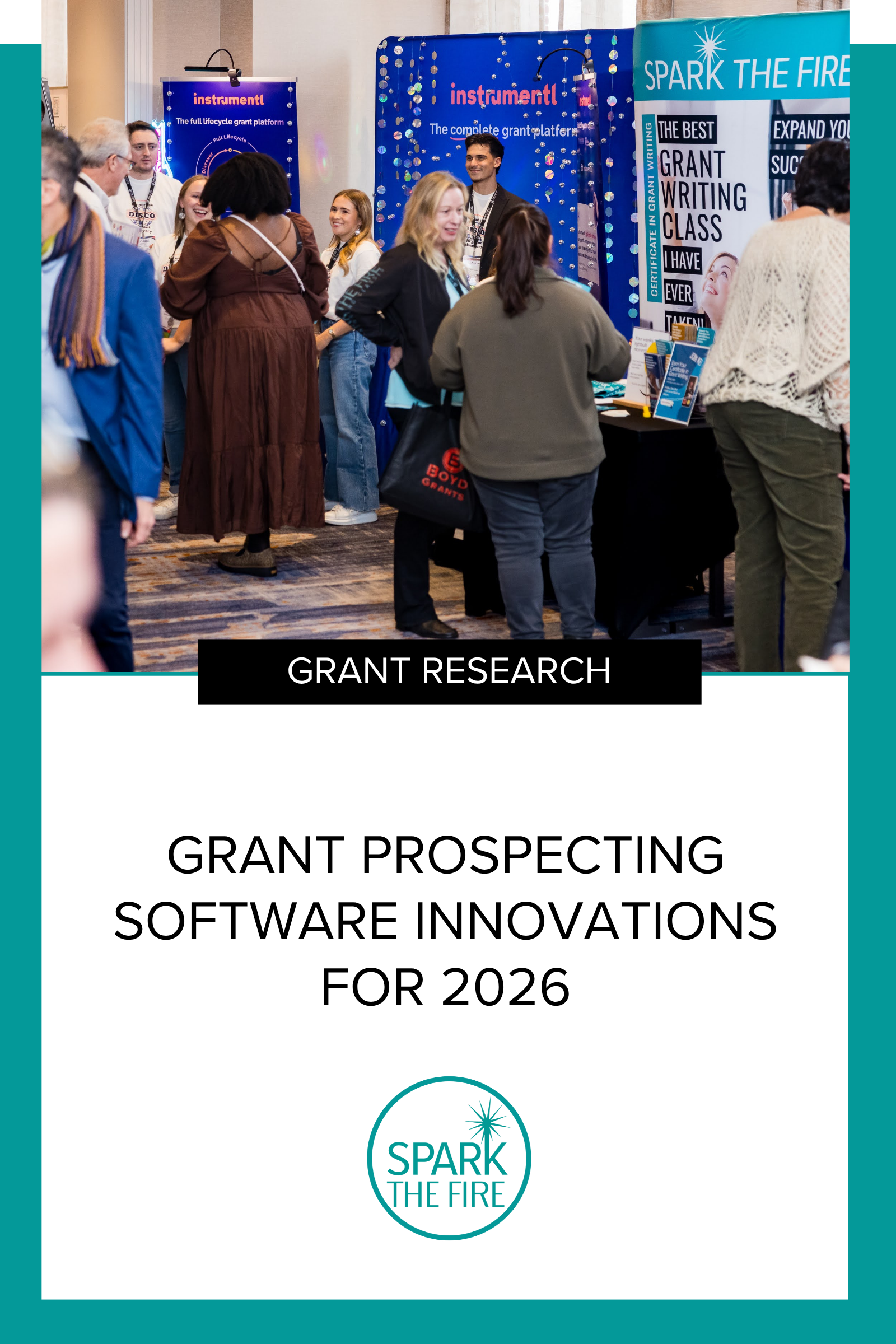
Grant Professionals Association Conference 2026 exhibit hall
 

Introduction

The field of grant writing is changing quickly. Nearly every week, I receive announcements about new platforms, plugins, and AI tools promising to streamline prospect research, write proposals automatically, or manage post-award reporting with little human oversight. Some of this technology is genuinely exciting. Some of it is concerning. And for many grant writers and nonprofit leaders, it can feel overwhelming to sort out which tools will help move our mission forward and are worth the investment.

This is why attending the Grant Professionals Association Conference in Baltimore this October felt especially timely. It gave me the chance to step into the noise and have real conversations face-to-face with some of the leading technology platforms in our field. I spoke with representatives from Instrumentl, Candid, and GrantStation about how they are approaching innovation, data ethics, and responsible use of artificial intelligence.

These conversations revealed something important: Technology in grant writing is not just about efficiency or automation. It is about supporting the depth of thinking, strategy, creativity, and human connection that define meaningful grant work. The question is not whether the tools exist. The question is how we choose to use them as grant professionals.

New Grant Research Tools and Features from the 2026 Conference

Instrumentl: Three AI-Powered Tools Launching Soon

Instrumentl continues to move quickly in releasing new features to support the full grant lifecycle, and they are currently the fastest among the major grant prospecting software platforms to roll out advancements. It is no surprise that development is accelerating, as the company recently received a $55 million growth investment from Summit Partners to expand AI capabilities and scale its platform. At the conference, the team shared three tools that are part of their upcoming release.

Prospecting Assistant: Solving the Taxonomy Tangle

If you read my recent article, The Taxonomy Tangle: Why Grant Database Categories Need Better Alignment, you'll immediately recognize that Instrumentl's new Prospecting Assistant was built to solve exactly the problem I outlined. Instead of forcing you to navigate inconsistent funder categories across databases, this feature allows you to describe your project in plain language. It then asks clarifying questions to understand what you are actually seeking to accomplish.

Where this tool stood out to me was in the results stage. Once recommended matches are generated, the Prospecting Assistant provides brief but meaningful explanations of why each funder aligns. This includes looking beyond stated guidelines to actual funding behavior. For example, a foundation may list that it funds statewide, but in practice only funds organizations in one city. The Prospecting Assistant flags this nuance directly in the match summary, which can save significant time and prevent pursuing opportunities that are unlikely to be successful. This aspect of the tool was particularly fascinating and exciting to see in action.

Apply Advisor: AI Writing Support That Stays in Your Voice

Apply Advisor supports writers during the proposal development process. It can take a general outcomes-focused sentence and strengthen it by suggesting metrics, benchmarks, and examples that help "not just tell but prove" the anticipated impact. Because the tool draws from documents that the organization uploads into Instrumentl, the writing remains in your voice. The company emphasized that these uploaded materials stay within a closed environment, meaning they are not shared with other organizations and the system is not training itself on your proprietary language. It can also help locate previously used phrasing across stored materials, which is particularly valuable for ensuring consistency across multiple proposals.

This tool sounds very similar to Grantable, a software program specifically designed to do this. The overlap in functionality is worth noting as the grant research tool landscape continues to evolve.

Award Assistant: The Fine Print Reader You Need

Award Assistant supports the post-award phase. It scans grant documents such as agreements, proposals, guidelines, and correspondence, and extracts key requirements into a summary document that is designed to be used in an internal grant kickoff meeting or grant launch. An internal kickoff meeting is when the organization brings together the relevant team members to review the obligations, deadlines, and expectations attached to a grant award so everyone is aligned from the start.

One aspect of Award Assistant that stood out to me is how well it reads the fine print. During the conference, an audience member shared that when their organization tested this tool, Award Assistant identified a contractual requirement they had previously overlooked. This ability to surface details that could easily be missed helps teams stay aware of what the organization is on the hook for and reduces the risk of non-compliance.

Behind-the-Scenes Preview: Real-Time Grant Spending Tracking

I also received a behind-the-scenes preview of this upcoming expansion during a one-on-one meeting with co-founder Angela Braren, where I was invited to test pilot the feature myself. Soon, users will be able to track grant spending in real time, broken down by line item. For example, you will be able to quickly see how much funding remains for office supplies or staffing allocations at any point during the grant period. I'm super excited about this development, as it has the potential to significantly improve internal grants management workflows and tracking.

Candid: Finally Uniting Foundation Directory and GuideStar Data

Remember when GuideStar and the Foundation Directory Online merged to form Candid? Many of us have been wondering what the long-term outcome of that merger would be. When I spoke with two representatives at Candid's exhibition booth, they shared that the organization is now preparing to launch its next generation platform, bringing together GuideStar's nonprofit profile data with the depth and history of Foundation Directory's funder and grantmaking records. Remember, the Foundation Directory Online literally wrote one of the earliest books on prospect research, The Foundation Directory (first published in 1956).

Imagine the possibilities of a true single destination where nonprofit data and funder data live together. The platform could show not only who funds what, but why and under what conditions. It could reveal patterns in which organizations are most likely to receive certain kinds of support, where funding tends to concentrate, and where gaps or unmet needs exist in specific communities. This kind of clarity has the potential to help organizations better understand alignment, strengthen their strategy, and make more informed decisions about where to focus their grantseeking efforts.

Candid's launch announcement notes that the upcoming platform will integrate machine learning and personalized recommendations to help users understand funding landscapes more strategically, rather than simply searching for data.

What I'm Watching: Geographic Data Visualization

One of the areas I am watching most closely is data visualization. Foundation Directory Online has long stood out for its ability to let users drill down not only by state, but also by county, city, municipality, and even legislative district. This level of geographic granularity has always been powerful for understanding where funding is actually happening. If Candid expands this capability even further in the new platform, it could offer an unprecedented level of clarity about where funding flows and where community needs may not be met. Candid has a long history of demonstrating its capacity to delve deeply into funding research, and I have high expectations for what this merging of data will uncover.

GrantStation: Simplicity and Accessibility

GrantStation launched its newly designed dashboard in May 2025, creating a visually clean and easy-to-navigate interface. The platform continues to offer comprehensive filter-based prospect research, and its taxonomy is intuitive and easy to understand. This makes it particularly helpful for organizations that may be newer to prospecting or that do not have the time or staff capacity to learn more complex database structures.

GrantStation remains a strong fit for organizations seeking a reliable, affordable grant research tool without a steep learning curve.

Grant Database Pricing Comparison

Instrumentl: Standard plan around $299/month; advanced AI plan around $499/month. I am one of the few grant professionals who can offer you a three-week free trial instead of the regular two weeks and a $50 off coupon: SPARKTHEFIRE50.

Candid: Pricing begins around $219/month or $1599/year, depending on features.

GrantStation: Typically $699/year, with occasional specials as low as $199. I have a discount code available upon request for Spark the Fire members to get an annual subscription for $139. Email me.

Frequently Asked Questions About Grant Prospecting Software

What is grant prospecting software?

Grant prospecting software (also called grant research databases or grant research tools) helps nonprofits identify potential funding opportunities by searching databases of federal grants, foundation giving, and corporate philanthropy. These platforms compile grant listings, eligibility requirements, and deadline alerts in searchable formats.

Which grant database is best for small nonprofits?

GrantStation's intuitive interface and affordable pricing when it’s on sale for $199 make it particularly accessible for smaller organizations or those new to prospect research. For federal grants specifically, Grants.gov remains a free comprehensive option.

What's new in grant databases for 2026?

The biggest shift is AI-powered features that explain why funders match your organization, not just that they exist. Instrumentl's Prospecting Assistant flags gaps between stated guidelines and actual giving patterns. Candid is merging GuideStar and Foundation Directory data with machine learning for strategic recommendations. The focus is moving from search engines to strategic intelligence.

Can AI write grant proposals?

Tools like Grantable and Instrumentl's Apply Advisor can be real time savers, helping you to think more deeply about what you are writing. The key is to use these tools as thought partners, not think of them as doing the work for you. Your voice and ideas are required for success. Grant writing still requires human strategy, relationship understanding, and authentic storytelling—AI simply helps you articulate those elements more effectively.

How do I choose between Instrumentl, Candid, and GrantStation?

My recommendation? Try all three—though only Instrumentl offers a free trial. Guess what? The Spark the Fire audience can get a free three-week trial to Instrumentl with my link instead of the usual two weeks. The fact that they offer a trial at all means they're pretty sure that once you try it, you'll be hooked. And you probably will be.

For Candid and GrantStation, consider trying them out for a month with a one-month subscription to see what you think. Each platform has different strengths, and what works best depends on your organization's specific funding focus, workflow, and budget. Test to see which interface feels most intuitive, which database coverage matches your needs, and which features you'll actually use. Many grant professionals end up using multiple platforms for different purposes.

Conclusion: The Best Grant Prospect Databases of 2026

As I reflect on these conversations, it is no surprise that the best grant prospect databases of 2026 are the same three that have been leading the field in recent years. Instrumentl, Candid, and GrantStation continue to anchor the work of grant professionals across the country. What is surprising is how quickly these tools are evolving, like all technology right now, with AI.

The work of grant writing has always been about more than searching for opportunities. It is about aligning mission, voice, community need, and funding strategy in ways that are thoughtful and clear. These new tools have the potential to reduce friction—so that our time and attention can stay on the meaningful work of telling our story, serving our communities, and building relationships that last.

Coming Soon: The Complete 2026 Grant Database Comparison

This article highlights innovations I discovered at the GPA Conference from the three leading platforms, but the grant research tool landscape continues to expand. I'm currently testing additional platforms and emerging AI-powered prospecting tools for a comprehensive comparison.

Are you a grant database provider? If your platform has new features or innovations you'd like included in my full 2026 grant prospecting software comparison, I'd like to hear from you. I'm particularly interested in:

  • AI-powered prospect matching and explanation features

  • Post-award grant management integration

  • Collaborative tools for grant teams

  • Geographic data visualization capabilities

  • Unique database coverage or data sources

Contact me at allison@sparkthefiregrantwriting.com to discuss inclusion in the comprehensive review.

My full comparison will include detailed platform reviews, feature analysis, pricing breakdowns, and recommendations by organization type and funding focus. Expected publication: January 2026.