Spark the Fire Grant Writing Classes

Top Grant Writing and Nonprofit Blogs to Follow in 2026

 
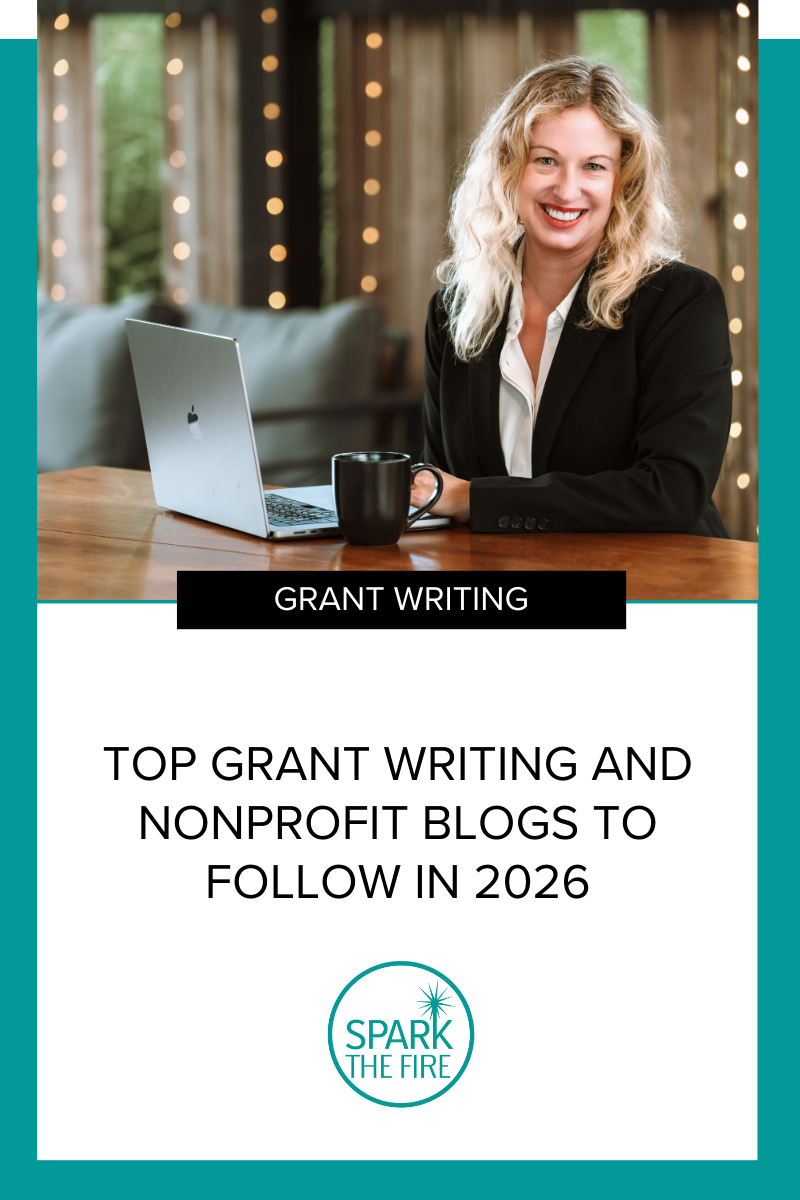
Allison Jones smiling while sitting at her laptop, inviting readers to explore the Best Grant Writing Blogs of 2026.
 

At Spark the Fire, I believe that great grant writers are lifelong learners. Whether you’re building your consulting business, applying for federal funding, or just getting started, staying inspired and informed is part of the journey.

This year’s list looks a little different from past versions. I reviewed every blog from the 2025 list and removed any that had not published at least four new articles in 2025. A surprising number had gone silent this year or even disappeared completely when I clicked their links. Since consistency matters — both for learning and for thought leadership — I only included blogs that remained active, relevant, and updated.

The result is a fresh, high-quality list of grant writing and nonprofit blogs that continue to publish meaningful content. These writers are trusted educators, thought leaders, and practitioners who share the same mission I do: helping you secure funding for causes that matter.

Below are my favorite blogs to follow in 2026, along with why I think they’re worth your time.

  • Spark the Fire – Our very own hub for weekly tips, grant writing templates, examples, and encouragement for purpose-driven grant writers. I write pieces that challenge assumptions in our field — thought-provoking, sometimes a little contrarian, and always rooted in the idea that meaningful work matters more than hustle. If you like smart think pieces about how to do this work with integrity and clarity, you’ll feel right at home here. If reading our think pieces sparks a desire to grow your skills even further, explore our Certificate in Grant Writing course — it’s where everything comes together in a guided, supported way.

  • 1832 Communications – Authored by Ephriam Gopin, this blog focuses on clear messaging and nonprofit donor communication. Some posts speak directly to grant writing. I appreciate how practical and accessible Ephriam’s writing always is.

  • Candid Blog – This is where I go for nonprofit funding trends and data. I especially enjoyed this recent article on whether U.S. Foundations will soon be using AI to review grant applications. If you want help finding the right funders for your organization, my guide on how to conduct smart, efficient prospect research is a great place to start.

  • Center for Effective Philanthropy (CEP) Blog – If you want to know what foundations are reading, read this blog. It covers funder-grantee relationships, strategy, evaluation, and impact. I find it incredibly grounding for understanding the funder perspective.

  • CharityHowTo – A blend of articles for every stage of your grant career. I liked this article written by fellow GPC, Diane Leonard. Clear, actionable, and always technically strong.

  • DH Leonard Consulting Blog – This team publishes consistently helpful posts on writing stronger proposals, federal readiness, and proposal reviews. Their motto is “don’t let grants stress you out,” and I think most of us can get behind that.

  • EUNA Solutions – This blog takes a tech-forward look at public sector grants. I appreciated a recent article about preparing for increased government oversight in 2026. I appreciated a recent artible about preparing for increased government oversight in 2026.

  • Foundant: GrantHub Blog – Foundant’s articles often focus on grant management, systems, and the foundation side of philanthropy. I always find it valuable to read what funders are being taught — it sharpens your own strategy when you understand how they think. I’m still missing Tammy Tilzey heading up their webinars, but the written content continues to be strong. A recent article recommending that foundations use AI to find similar grantees was especially interesting from a grant writer’s perspective. If you’re exploring how AI is shaping our field, you might also enjoy my AI & Grant Writing mini-series, where I break down practical, ethical ways to use AI tools.

  • Funding for Good – My friend Mandy Pearce and her team publish excellent articles on nonprofit strategy, capacity building, and consulting today. I particularly liked a recent piece about improving your consulting website. If you want even more behind-the-scenes insight into the world of grant writing firms, check out the Inside Grant Writing Businesses series — the conversations are smart, practical, and sometimes delightfully surprising.

  • Fundraising HayDay – I met this dynamic duo at the GPA Conference this year and became an even bigger fan. Their podcast-inspired writing offers smart, timely insights on teams, writing, deadlines, and the realities of grant work.

  • Grant Professionals Association – Industry updates, tools, and ethical guidance from the leading professional association. You can also find my guest blog here about grant prospect database taxonomy. You can also find my guest blog on grant prospect database taxonomy.

  • Instrumentl Blog – From the best grant prospect research database on the market comes one of the most trusted grant writing blogs online. I enjoyed Karen Lee’s article on general operating grant, and you’ll find several of my articles featured here too.

  • Just Write Grants – Melanie Lambert writes directly to executive directors and nonprofit leaders. Her recent article on maximizing year-end momentum in your proposals was especially energizing. This article on maximizing the year-end in your grant proposals fired me up.

  • GrantsPlus – A meaty blog with smart takes on capacity building and organizational readiness. This article entitled “Why You’re Losing Your Grant Writer and What to Do About It.” made me laugh and nod along.

  • Grant Seeker’s Edge – A newer LinkedIn-based blog focused on general fundraising. It currently has 18 issues and is steadily growing. There’s good practical insight here if you want short, digestible content.

  • GS Insights – GrantStation’s weekly, practical tips for finding and evaluating funders.

  • Millionaire Grant Lady – his monthly blog covers topics that most others don’t touch. I liked a recent article demystifying myths about faith-based organizations getting grants. Hint: they do.

  • MyFedTrainer – Consistent guidance on compliance, federal requirements, and managing complex federal awards.

  • Nonprofit AF – Vu Le serves up bold, honest, funny reflections on nonprofit life, leadership, and equity. It’s not a grant writing blog specifically, but it’s essential reading for nonprofit thinkers.

  • PEAK Grantmaking Blog - This is another “what funders are reading” resource. Articles focus on equity, transparency, and philanthropic best practice. If you’re exploring how AI is shaping our field, you might also enjoy my AI & Grant Writing mini-series, where I break down practical, ethical ways to use AI tools.

  • Philanthropy Today – Produced by the Chronicle of Philanthropy, this is like the New York Times of nonprofit news and analysis.

  • Seliger + Associates – A bit of a contrarian, tell-all style focused on federal grants. Their recent article questioning whether the “84 banned words” list is an urban legend made me think.

  • Think and Ink Grants – Equity focused strategies, business growth advice, and practical writing guidance for consultants and nonprofit leaders.

  • Write Epic Grants – I saved the best for last. This is a daily blog, which is impressive enough, but the real value is how fresh and creative each entry is. I love receiving these short, energizing tips every day.

Frequently Asked Questions

What makes a grant writing blog worth following in 2026?

Look for blogs that offer practical advice, current examples, and strategic thinking. The best ones help you understand funder expectations, improve your writing, and stay ahead of sector trends like AI, federal oversight, and trust-based philanthropy.

 How can these blogs help me become a stronger grant writer?

They give you access to expert thinking, proposal strategies, prospect research tips, and real-world case studies. Reading widely helps you refine your voice, think more strategically, and write proposals that resonate with funders.

 Are these blogs helpful for both nonprofit staff and freelancers?

Absolutely. Whether you’re an in-house grant writer, a consultant building your business, or an executive director writing proposals yourself, these resources offer insights that apply across roles.

 How do I keep up with new grant writing trends?

 Subscribe to a mix of blogs on this list, follow sector leaders on LinkedIn, attend webinars, and stay engaged with professional associations. The field evolves quickly, especially with emerging AI tools and shifting funder priorities.

Which blog should I start with if I'm brand new to grant writing?

Start with Spark the Fire, Instrumentl, Funding for Good, and DH Leonard Consulting. They offer clear, accessible guidance you can use right away.


Final Thoughts

There is no one right way to learn grant writing, and no single source has all the answers. The magic comes from surrounding yourself with teachers, peers, and thinkers who challenge you, inspire you, and remind you why this work matters.

If you have a favorite blog that isn’t listed here, share it in the comments. We love discovering new voices in the field. Also, if you want curated grant writing insights delivered each week, join my newsletter — it’s where I share trends, tips, and tools I don’t post anywhere else. Ready to take your skills further? Explore Spark the Fire’s Certificate in Grant Writing Course for 2026. 

The Metrics Question: How Do We Measure Real Success in Grant Writing Education?


The grant writing profession has spent years proving that "success rates" are unfair metrics for evaluating grant professionals. Too many variables sit outside the writer's control: organizational readiness, funder priorities, relationship history, geographic distribution requirements, and timing factors that have nothing to do with proposal quality.

Still, prospective students and employers ask a fair question:
How do you measure if a grant writing course actually works?

When someone searches for the best grant writing course or wonders whether a grant writing certificate is worth it, what they really want is evidence. Real data. Real results. Real skills demonstrated in real organizations.

That’s the question I’m wrestling with. And I want your help.

In This Article, You Will Learn

·       Why traditional grant success rates cannot measure training effectiveness

·       What academic, professional, and coaching programs track

·       What Spark the Fire currently measures within our 8–10 week Certificate in Grant Writing

·       Four new ideas for measuring real-world success, including a sophisticated revenue forecasting metric

·       How alumni and organizations can help define what “excellent grant writing education” truly means

Why Measuring Grant Writing Training Is So Complicated

The grant writing world has rightfully moved away from simplistic success rates. The field now values strategic thinking, relationship building, professional ethics, readiness assessment, and project design.

But we still haven’t answered one big question:
How do you prove a grant writing training program prepares someone for real jobs and real impact?

After being named the “best grant writing course” in the world by Instrumentl for four years, I’m confident in what we teach. But I’m not satisfied with surface-level metrics. I want evidence that graduates can perform in actual roles across nonprofits, government agencies, educational institutions, tribal entities, and community organizations.


What Other Grant Writing Programs Track

Every program handles this differently:

Academic programs track:

·       completion rates

·       CEUs earned

·       test scores

·       job placement

Training programs track:

·       student confidence surveys

·       testimonials

·       anecdotal success stories

Business coaching models track:

Holly Rustick’s Freelance Grant Writer Academy stood out to me. She tracks collective impact metrics from her 12-month business coaching program:

·       grants raised by students (88 million dollars so far)

·       business revenue earned by students (2.2 million dollars)

What's smart about this is she built it into the program from the start. Students know when they enroll that they're joining a movement toward collective goals: $1 billion in grants for nonprofits and $30 million in student business revenue by 2030. The tracking isn't an afterthought - it's part of the identity.

That works beautifully for a freelance-focused, year-long program with clear entrepreneurial goals.

But what about a comprehensive grant writing education that serves career changers, nonprofit professionals, freelancers, volunteers, and lifelong learners?

No model fully fits Spark the Fire. Each approach tells part of the story. But none feel complete for what we're trying to accomplish at Spark the Fire. So I’m exploring new ones.

How Spark the Fire Grant Writing Classes Already Measures Learning

Let me be clear about what Spark the Fire already includes:

Throughout the 8-10 week course, we assess learning with:

  • Graded knowledge checks on ethics, technical requirements, and strategic thinking

  • Rubric-scored assignments on every component of a grant proposal

  • Individual instructor feedback on multiple drafts

  • Pre- and post-course knowledge and confidence assessments

  • Final project: a complete, professional-quality grant proposal

  • 24 continuing education units toward GPC or CFRE certification

We teach technical writing skills, strategic thinking, prospect research, organizational readiness assessment, professional ethics, and relationship building. Students leave with templates, frameworks, and real work samples.

Our curriculum is rigorous. Students leave prepared.

But is in-course performance enough proof for employers and prospective students? Maybe. Maybe not.

The Four Approaches I'm Considering Next

I'm genuinely exploring several approaches. None are decided. I need your input.

Option A: Strengthen In-Course Assessment

We already assess skills throughout the course. Should we formalize this even more? For example, we could add letter grades to the certification rather than keeping it pass/fail. This would give prospective employers or clients a clearer signal about performance levels.

Question for you: Is in-course assessment the most important proof? Does knowing that graduates demonstrated competency during training give you confidence they can perform after?

Option B: Track Graduate Career Progression

Follow graduates' professional advancement over time:

  • Secured grant writing roles (for career changers)

  • Promoted within their organizations

  • Moved to better-fit organizations (upward or lateral moves that align with their goals)

  • Launched freelance businesses

  • Added grant writing to their responsibilities

  • Transitioned from volunteer to paid positions

Question for you: Does career trajectory prove training effectiveness? Would seeing that graduates advance professionally matter to you?

Option C: Measure Collective Impact (With Full Transparency)

Track the total dollars our graduates help raise for nonprofits, government agencies, educational institutions, tribal entities, and other organizations. I'd be completely transparent about the limitations: this number reflects organizational readiness, existing relationships, program quality, funder priorities, and many factors beyond the grant writer's control.

Question for you: Even with those attribution challenges, does collective impact matter? Would knowing "Spark the Fire graduates collectively raised $X million" influence your trust in the program?

Option D: Forecasting Accuracy (A Sophisticated Professional Metric)

Here's where I get genuinely curious - and I'm not sure if this is too abstract or exactly right.

I have used probability forecasting to predict annual revenue from grant writing for an organization. You assign each opportunity a probability based on fit, readiness, and relationship strength, multiply by the request amount, and sum the weighted values.

Here’s a simple numeric example:

A graduate builds a one-year grant calendar with four proposals totaling 400,000 dollars:

·       Proposal A: 150,000 dollars at 70 percent probability

·       Proposal B: 100,000 dollars at 40 percent probability

·       Proposal C: 100,000 dollars at 25 percent probability

·       Proposal D: 50,000 dollars at 80 percent probability

Expected revenue forecast =
(0.70)(150,000) + (0.40)(100,000) + (0.25)(100,000) + (0.80)(50,000)
= 217,500 dollars

If actual results land within roughly 15 percent over 12 months, the forecast was accurate.

What if we measured whether graduates can accurately forecast grant revenue?

Not "did you raise $X million" but "can you strategically assess your portfolio and make calibrated predictions?"

This metric measures:

  • Strategic thinking about organizational fit and funder priorities

  • Understanding of readiness factors that affect success

  • Professional-level judgment and pattern recognition

  • The ability to think beyond single proposals to portfolio management

An example metric: "Spark the Fire graduates' revenue forecasts averaged within 15% of actual results over a 12-month period."

Here's my question: Is this too complex—or is it exactly the kind of real-world proof the field needs?

 I find it intellectually compelling. But does anyone besides me care?

What Would You Be Willing to Track?

For this to work, alumni must participate. If you're an alumnus, what would you be willing to report back?

Holly Rustick's model works partly because students know upfront they're joining a movement toward collective goals ($1 billion in grants, $30 million in businesses by 2030). Tracking isn't an afterthought - it's part of the identity.

Would that resonate with Spark the Fire graduates?

Would you want to be part of proving that excellent grant writing education produces measurable results? Would you respond to a 6-month survey? Share your career wins? Report your challenges?

And critically: What would motivate you to do this?

Contributing to collective achievement? Demonstrating the value of the profession? Building credibility for future graduates? Access to an alumni community? Something else?

FAQ

How do you measure success in a grant writing course?

We evaluate skills through graded assignments, instructor feedback, and a final professional-quality proposal. We are exploring additional long-term metrics such as career outcomes, collective impact, and grant revenue forecasting.

Do grant writing “success rates” matter?

Not really. Grant decisions depend on funder priorities, relationships, geographic requirements, and organizational readiness. Skill development, strategic thinking, and ethical practice are better indicators of a writer’s ability.

What should employers look for in a grant writing certificate?

Evidence-based curriculum, practical assignments, instructor-reviewed proposals, and skills tied to real-world grant writing (research, readiness assessment, budgeting, outcomes, and forecasting).

What is grant revenue forecasting?

It’s a method professionals use to predict annual grant revenue by assigning probabilities to each opportunity. It measures judgment and strategic thinking, not luck.

Your Turn

I want to hear from you.

·       Prospective students: What evidence gives you confidence that a training program prepares you for real grant writing roles?

·       Alumni: What would you be willing to track and share?

·       Organizations: What information helps you trust a certificate or credential?

·       Educators: What metrics have you found valuable in your own programs?

Email me or share your thoughts in the comments. I’m genuinely listening.

And if the forecasting model either sparks your curiosity or confuses you completely… I especially want to hear from you.