Grant Writing E-Books & Templates
Take your grant writing to the next level with our expert e-books and customizable templates.
Whether you're just starting out or ready to sharpen your skills, these resources offer practical
strategies, expert tips, and time-saving tools. From step-by-step guides to plug-and-play
templates, everything is built to help you get it right the first time—and every time after.
Templates Mentioned in This Week’s Blog
Product Description
You've got volunteers logging hours, donors dropping off supplies, and a local business offering their conference room for free — and somewhere in your grant agreement, it says all of that counts toward your required match.
The only problem? You have to prove it.
Chasing down signatures, trying to remember what rate to use for volunteer hours, and Googling "how do I report in-kind contributions to a funder" at 11pm the night before your report is due... not exactly a good time.
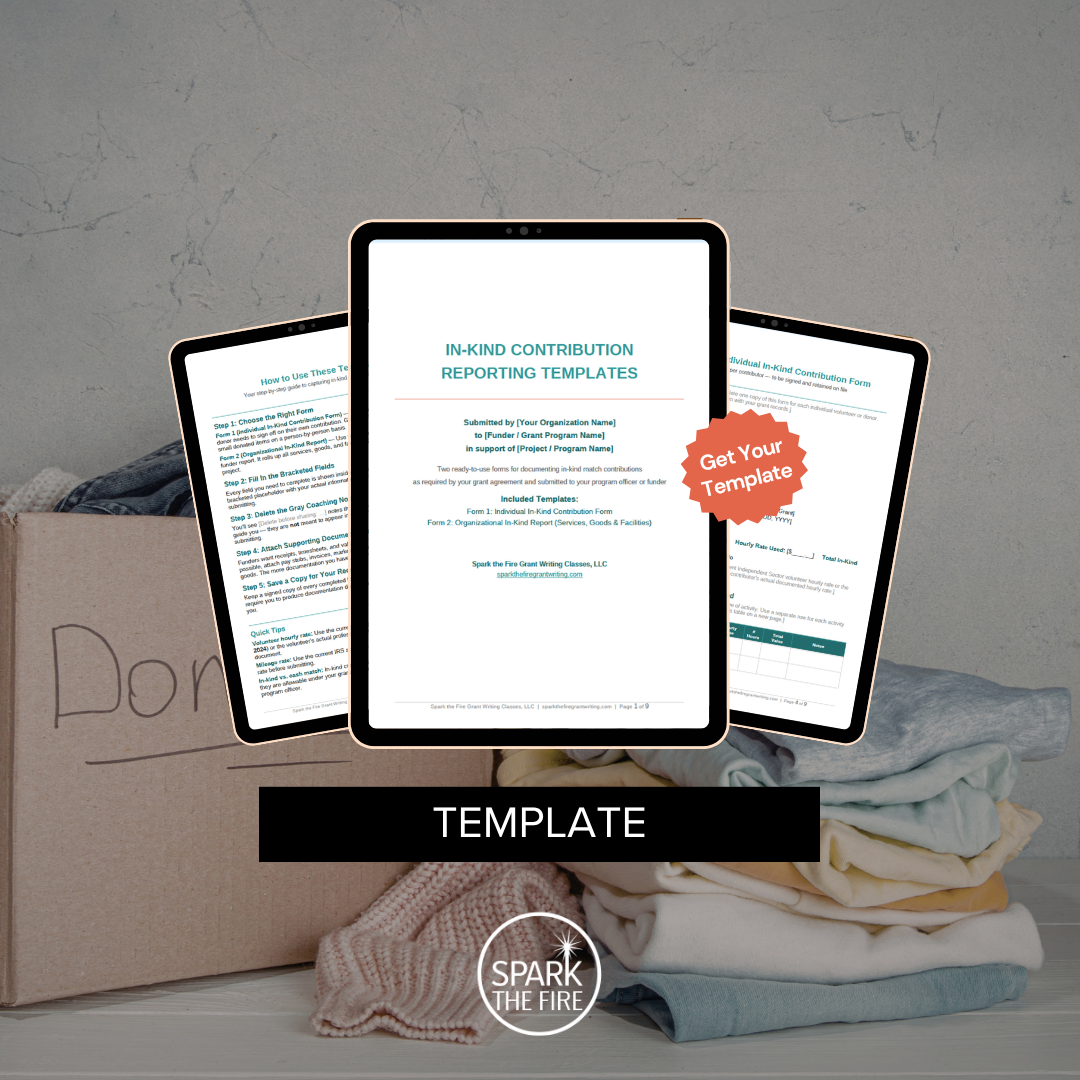
These two ready-to-use Word document templates make in-kind reporting fast, clean, and funder-ready — so you can stop stressing about documentation and get back to actually running your programs.
What's inside this template pack:
Form 1 — Individual In-Kind Contribution Form One form per contributor. Use this for every volunteer, donor, or service provider who needs to sign off on their own contribution. Tracks hours by activity type (meetings, facilitation, outreach, technical assistance, and more), plus space for donated goods, equipment, supplies, and mileage. Includes a certification signature block.
Form 2 — Organizational In-Kind Report Your master funder summary. This is the form you actually submit with your grant report. Rolls up all services rendered, goods donated, and facilities provided into one organized document — with a grand total box and approval signature block for both the donor and your organization.
Both forms include:
Pre-labeled activity categories so nothing gets missed
Built-in reference notes for volunteer hourly rates and mileage rates
Signature and certification blocks for compliance
Step-by-step instructions so anyone on your team can fill them out
Gray coaching notes that guide you through each section (and remind you to delete them before submitting — you're welcome)
Works with: Microsoft Word (.docx). Editable on PC and Mac.
Made for nonprofit staff, grant writers, and program managers who are done reinventing the wheel every reporting cycle.
Spark the Fire Grant Writing Classes, LLC | sparkthefiregrantwriting.com
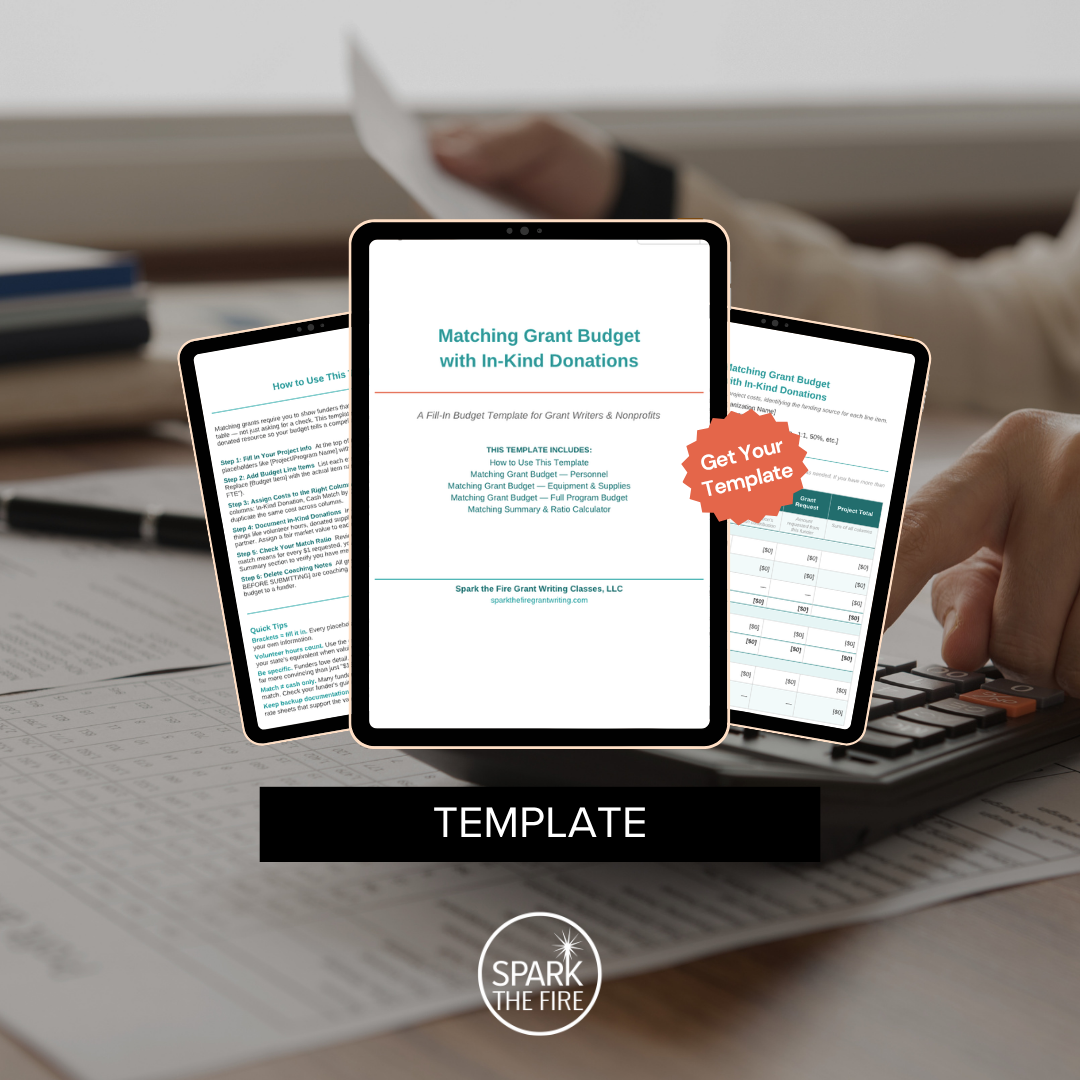
Matching grants sound great — until you're staring at a blank budget trying to figure out what counts as match, how to value donated volunteer time, and whether your numbers actually add up to the right ratio. Sound familiar?
This fill-in budget template takes the guesswork out of matching grant budgets. It's built specifically for nonprofits and grant writers who need to show a funder that they're bringing real resources to the table — not just asking for a check.
What's inside:
How to Use This Template — step-by-step instructions including how to document in-kind donations and verify your match ratio
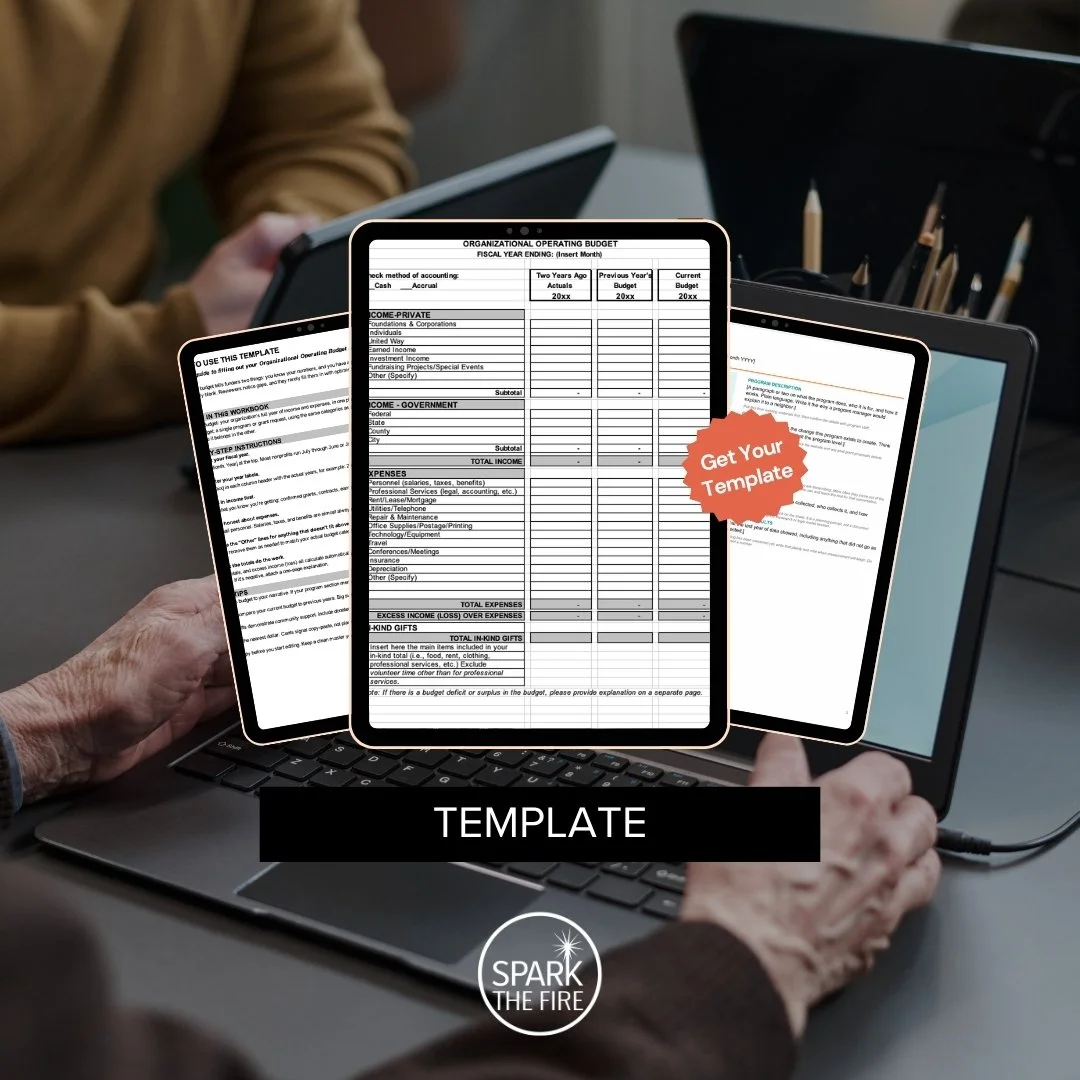
Full Program Budget Table — organized by category (Personnel, Fringe Benefits, Equipment, Supplies, Contractual, Travel, Other Direct Costs, and Indirect Costs) with separate columns for In-Kind Donations, Cash Match, and Grant Request
Matching Summary Table — breaks out each funding source as a dollar amount and percentage of total project cost
Match Ratio Check — a simple fill-in section to confirm you've met the funder's requirement before you hit submit
Every placeholder is in plain brackets so you always know exactly what to fill in. Coaching notes in gray italic walk you through each section — just delete them before you submit.
Works in Microsoft Word. Download, fill in, done.
Product Description
You know you're supposed to track in-kind donations throughout the year.
You also know what actually happens: it's February, a grant report is due in two weeks, and you're trying to reconstruct six months of donated conference room time and pro bono legal hours from memory, a few old emails, and vibes.
Not great. Not defensible. Not the situation your funder wants you to be in.
This In-Kind Donation Tracking Log gives you a clean, organized system to document every contribution as it happens — so when grant application season rolls around (or your auditor comes knocking), you're ready.
What's inside:
Annual In-Kind Tracking Log One organized Word document table covering your entire fiscal year. Record contributions in real time across five category sections — each with its own subtotal row — so your numbers are always current and categorized.
Five Contribution Categories:
Space & Facilities
Equipment & Supplies
Personnel & Volunteer Time (Skilled Services Only)
Professional Services
Other Goods
Eight tracking columns per entry: Date | Donor Name / Organization | Contribution Type | Description | Valuation Method | $ Value | Documentation on File | Grant / Project
Documentation Status Column A simple Yes/No checkbox for each entry — so you always know what's documented and what still needs a letter or email on file before it's defensible.
Coaching Notes Throughout Gray italic guidance that walks you through how to value contributions correctly, what counts as in-kind for 990 purposes, and how to reconcile with your financials at year's end. Delete before sharing — the notes will tell you so.
Also includes a "How to Use This Template" page with:
7-step instructions for setting up and maintaining your log
Quick Tips on IRS rules for skilled volunteer time, fair market value standards, and the Independent Sector hourly rate
A reminder about reconciling with your CPA before filing your 990 (because that conversation is better in January than in April)
Works with: Microsoft Word (.docx). Editable on PC and Mac.
Made for nonprofit staff, grant writers, and program managers who want to stop recreating their in-kind documentation from scratch every single grant cycle.
Spark the Fire Grant Writing Classes, LLC | sparkthefiregrantwriting.com
Toolkits - Bundles of Templates
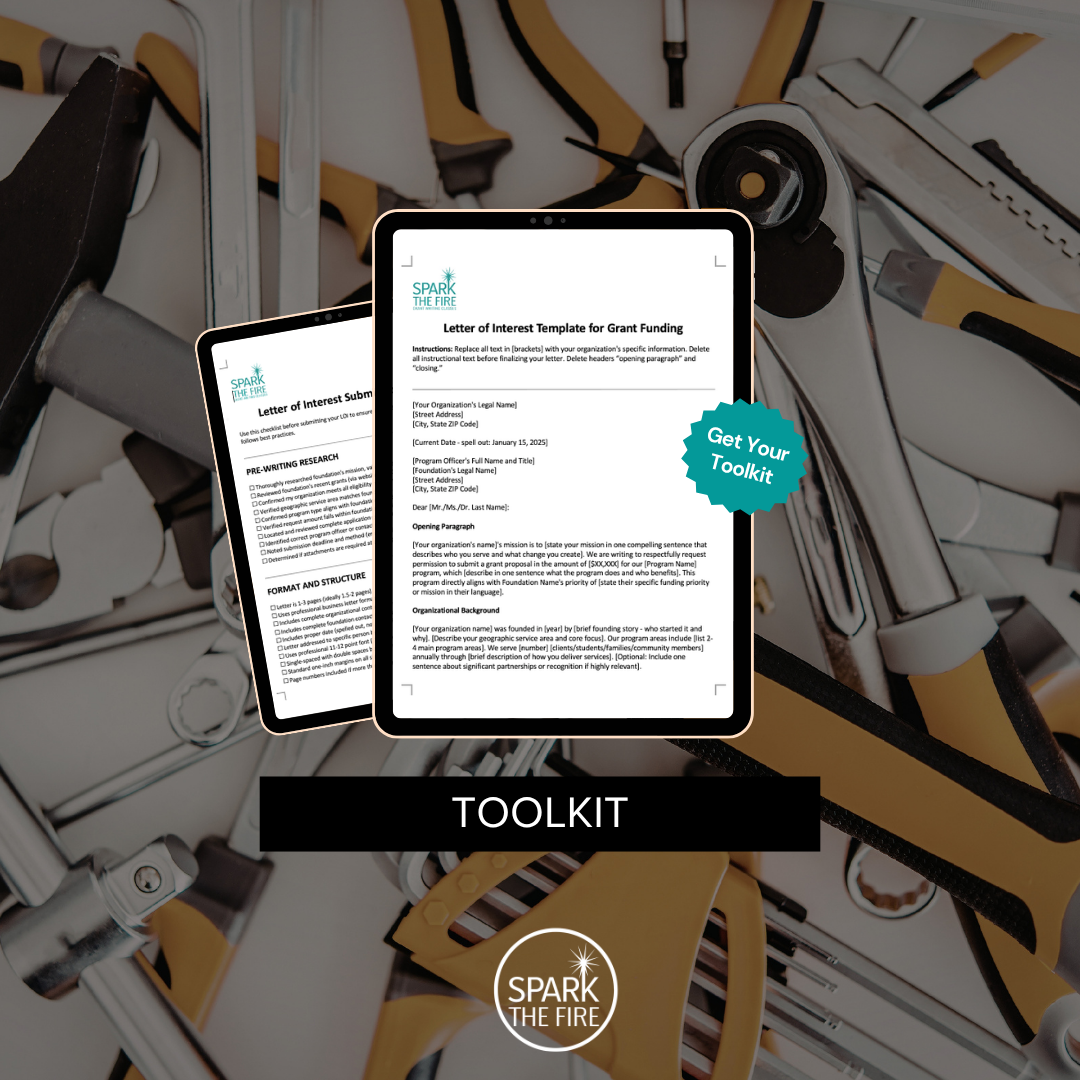
Everything You Need to Write Winning Grant LOIs
Approaching foundations for the first time? Struggling to get past the letter of interest stage? This comprehensive toolkit gives you the structure, language, and strategies you need to succeed.
📚 Complete Writing Guide
You Get:
The 7 essential components every LOI must include
Real sample letter with expert analysis
Step-by-step process from research to submission
12+ advanced tips for competitive letters
Comprehensive FAQ section
You Learn:
How to hook readers in your opening paragraph
Demonstrating authentic foundation alignment
Using empowering, participant-centered language
Creating budget overviews that build trust
Following up professionally
📋 Professional LOI Template
You Get:
Fill-in-the-blank format with detailed prompts
Proper business letter structure
Guidance for each essential section
Formatting tips and best practices
You Save:
Hours of figuring out what to say
Time researching proper structure
Stress of starting from scratch
✅ Submission Checklist
You Get:
Pre-writing research checklist
Format and structure verification
Content quality review items
Foundation alignment check
Final submission requirements
You Avoid:
Submitting incomplete letters
Missing critical components
Embarrassing formatting errors
Damaging your reputation
Instant Access | MS Word and PDF Formats (Email Us For GoogleDocs After Purchase) | Use Immediately
Perfect for nonprofits serious about securing foundation funding.
Win more grants by getting it right the first time! When you submit grant proposals, you are always required to include certain documents. With this template package, you'll have all your forms ready to go and beautifully formatted for your next grant application. Fast-track your grants with these beautifully designed, functional templates for required documentation uploads.
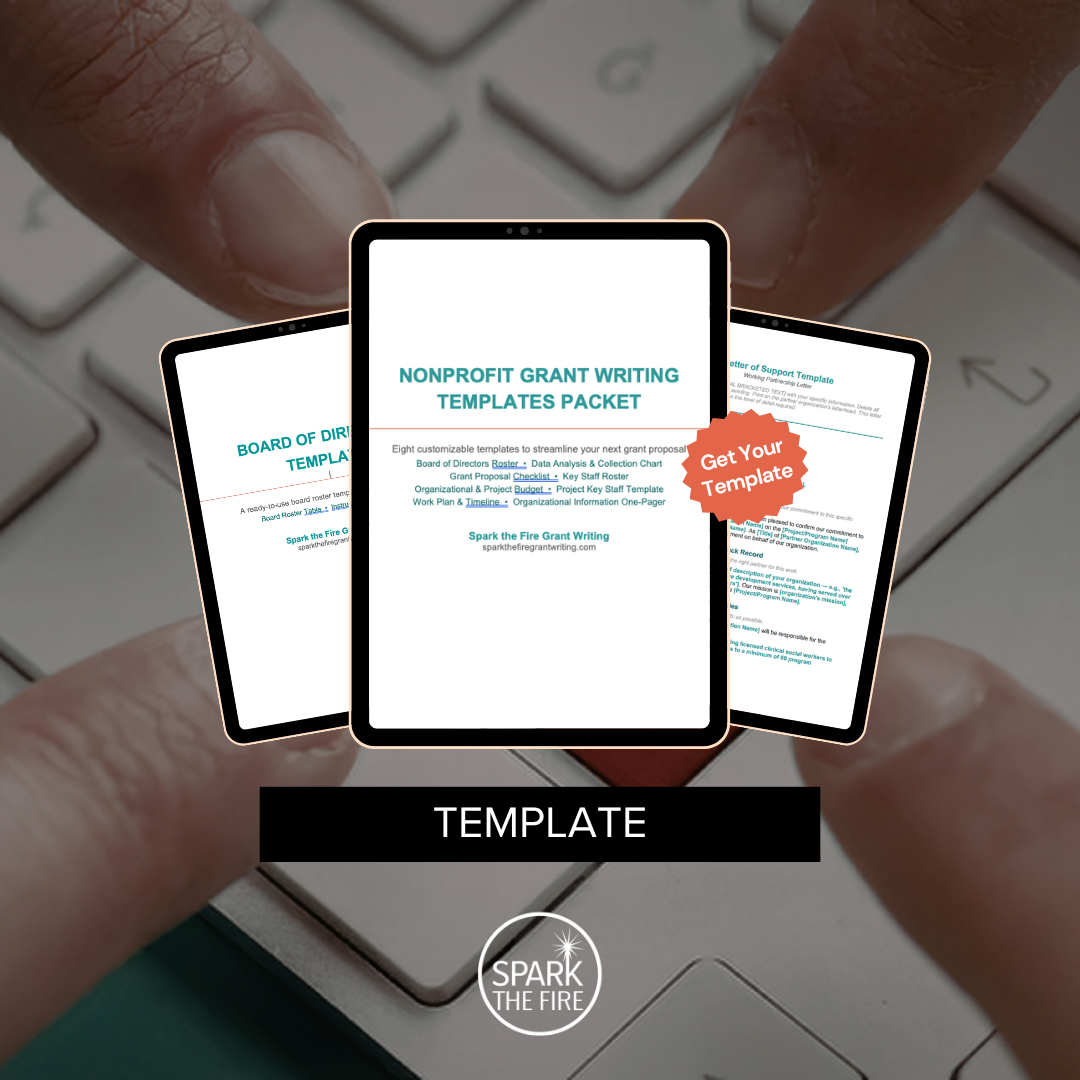
The Nonprofit Template Packet includes:
Board of Directors Roster
Key Staff Roster
Organizational Budget
Program or Project Budget
Sources of Income
Non-Discrimination Statement
Grant Proposal Checklist
Project Key Staff Template
Work Plan & Timeline Template
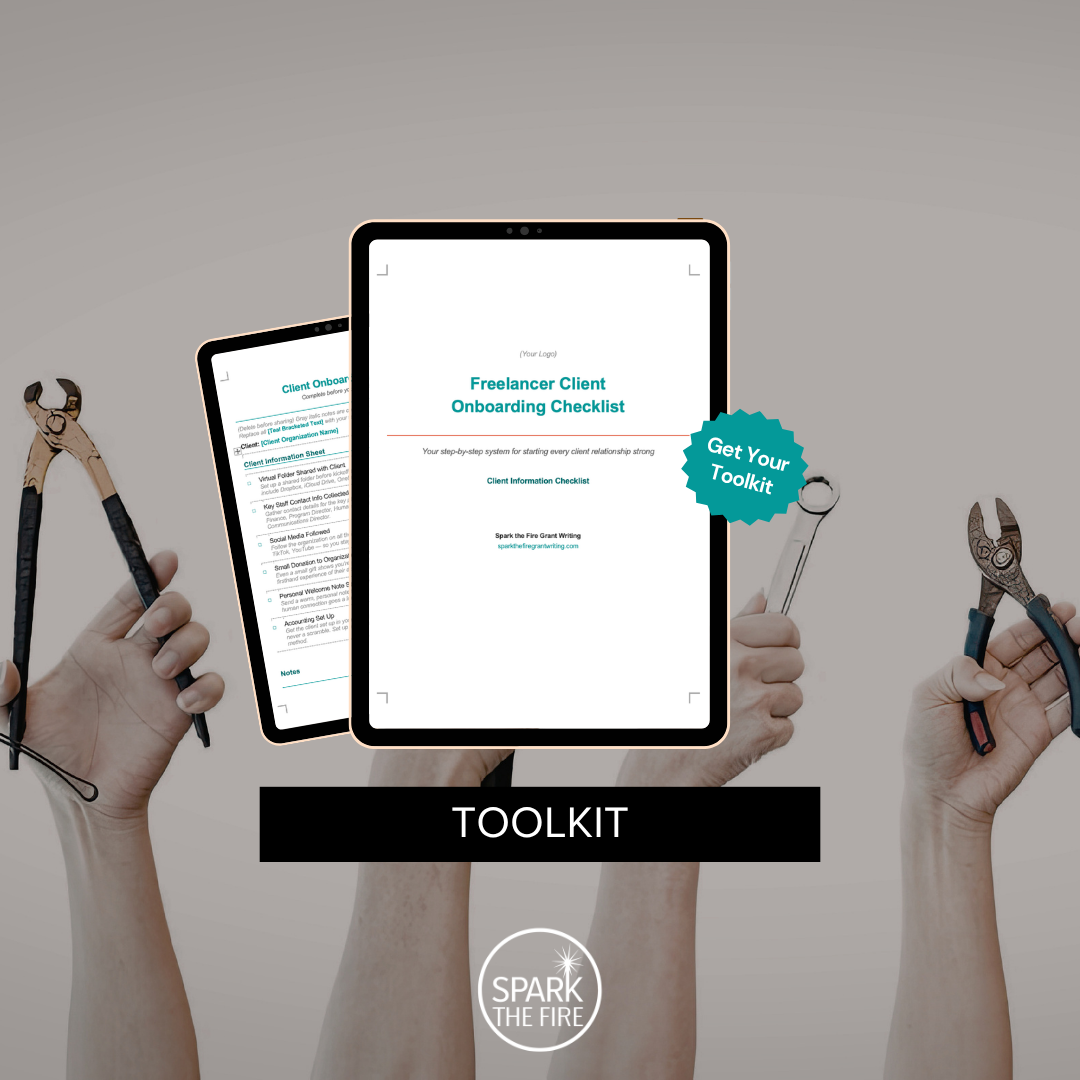
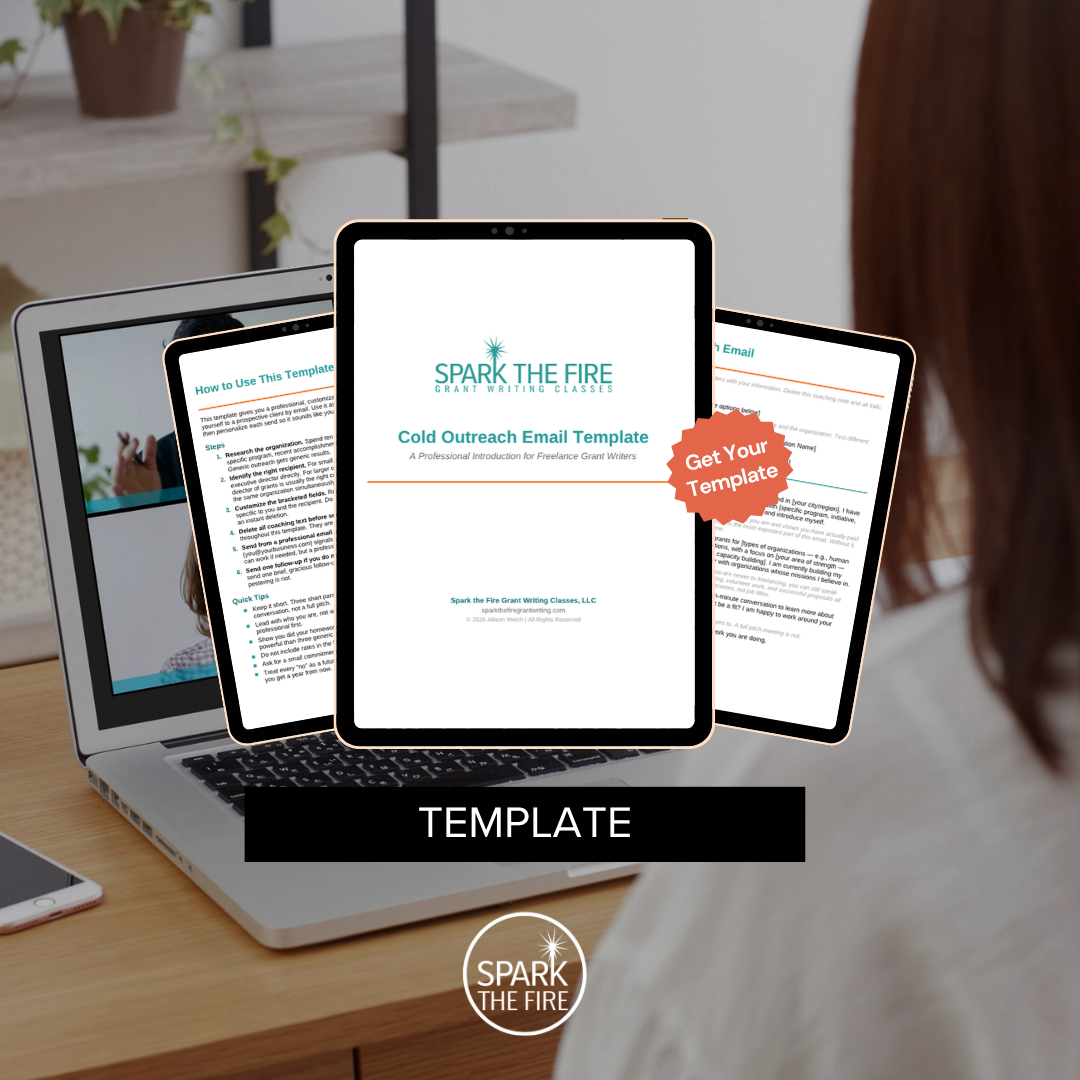
Ready to take your freelance grant writing business to the next level? Here are the templates you need to streamline your work. Included in this packet are:
Client Checklist for Onboarding
Client Intake Form
Common Grant Application
Fee Schedule
Freelancer Checklist for Onboarding
Hourly Invoice
Project-Based Invoice
List of Services
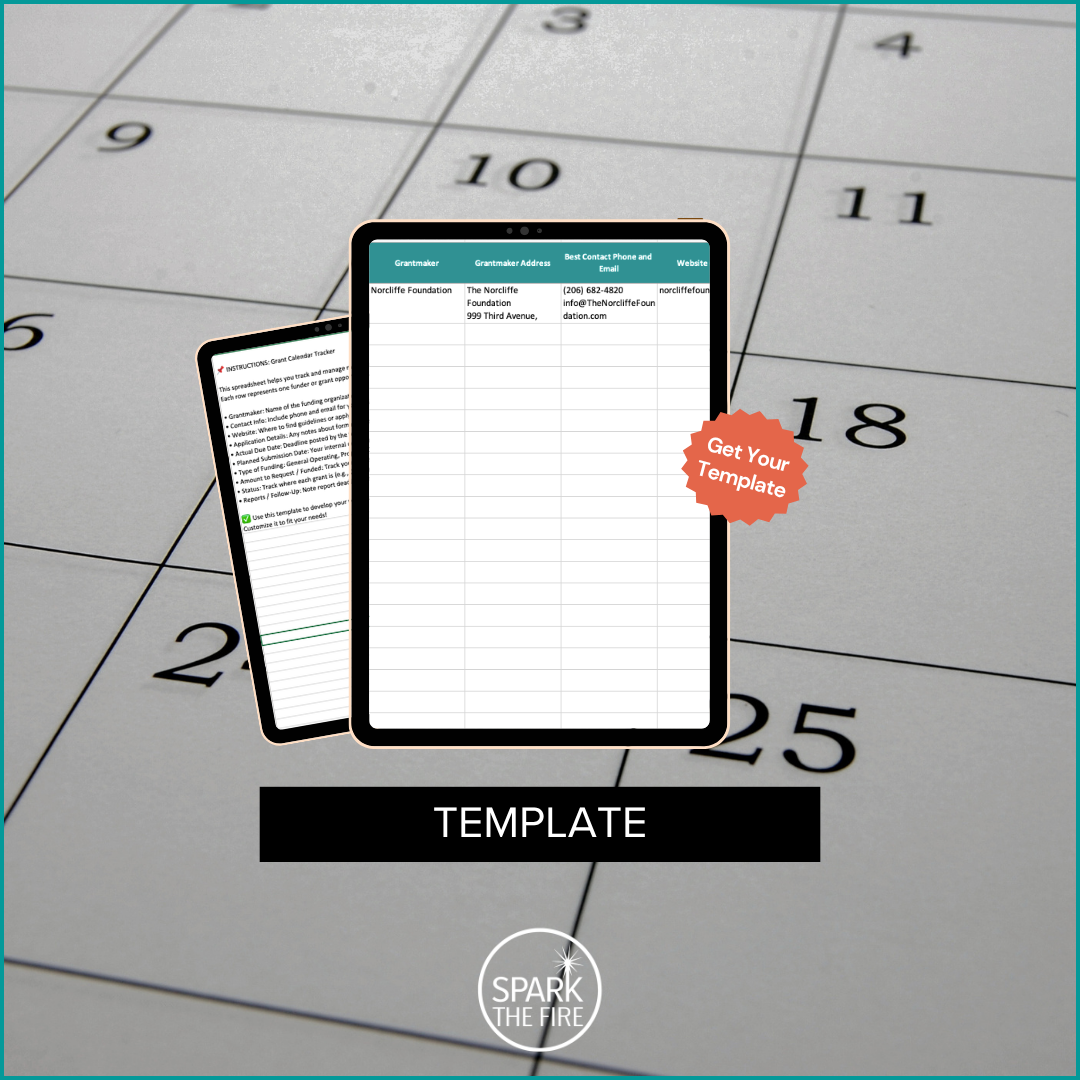
Sample Grants Calendar
Status Report Sample
Template for Contract
Website Architecture Worksheet
Staffing Templates for Grant Applications
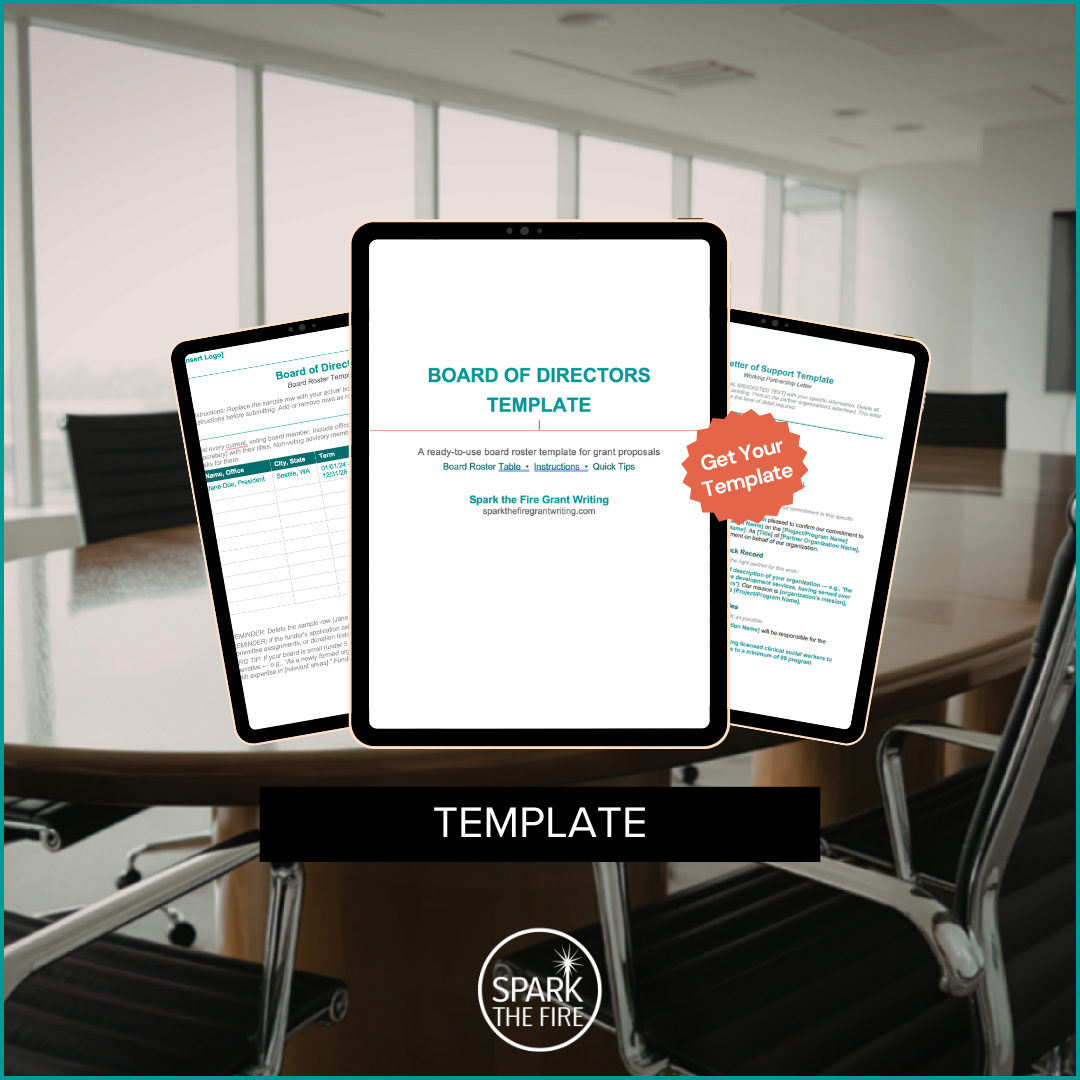
Funders ask for a board roster. You panic-Google "what should a board list look like," copy something from a forum, and cross your fingers. There's a better way.
The Board of Directors Roster Template gives you a clean, professional, funder-ready board list in minutes — no formatting headaches, no guessing what to include. Just open, fill in, and go.
This template includes a pre-formatted roster table with columns for name, office title, city/state, term dates, and affiliations — exactly what reviewers want to see. It also comes loaded with step-by-step instructions and Quick Tips covering everything from how to handle a small or newly formed board to why term dates matter more than you think.
Whether you're embedding your board list in a narrative or submitting it as a standalone attachment, this template has you covered.
What's included: Board Roster Table • Step-by-Step Instructions • Sample Completed Row • Quick Tips
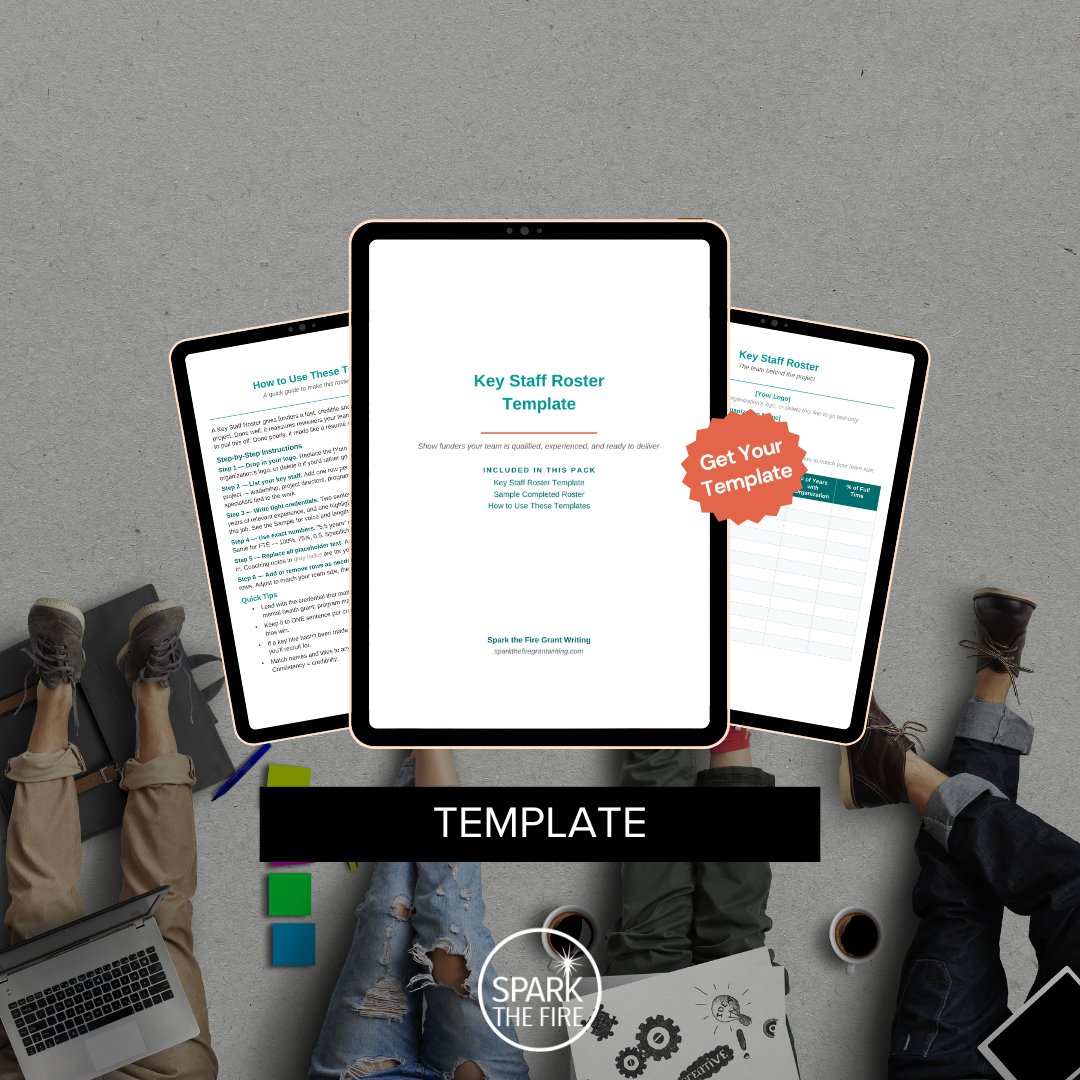
Funders don't just fund programs — they fund people. And if your key staff section reads like a list of job titles and vague credentials, you're leaving credibility on the table.
The Key Staff Roster Template gives you a clean, funder-ready format for presenting the humans behind your project. One row per person, two tight sentences per credential area, and every detail a reviewer needs to feel confident your team can actually deliver. No fluff, no rambling bios — just the information that builds trust fast.
The template comes with a fully completed sample roster so you can see exactly what strong, specific credentials look like in practice. (Spoiler: "5.5 years of experience" hits harder than "several years." Specific numbers win every time.)
Whether you're listing a full project team or just a director and a program manager, this template scales to fit.
What's included: Key Staff Roster Template • Sample Completed Roster • Step-by-Step Instructions • Quick Tips
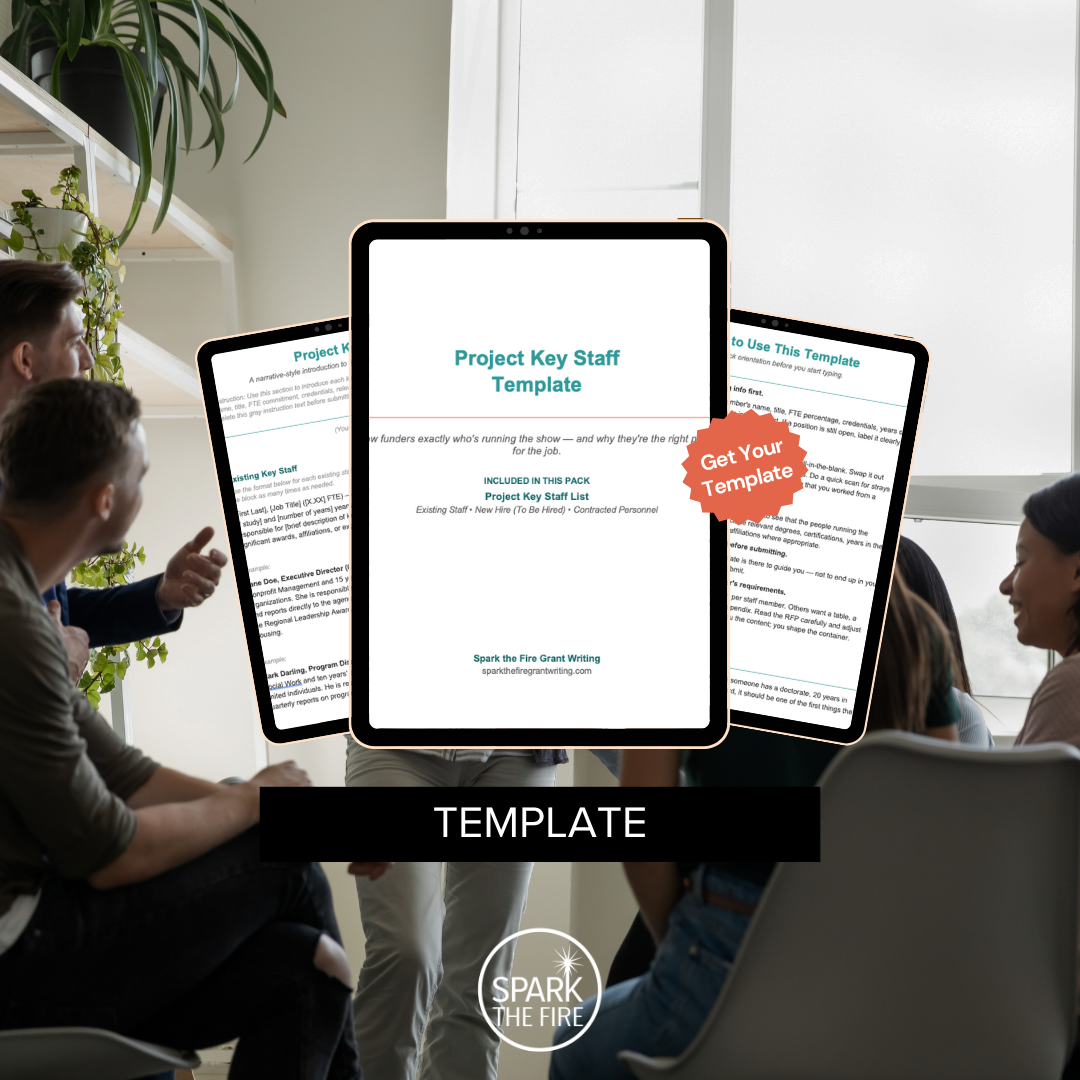
Your grant application is asking for a key staff section and you're staring at a blank page wondering how much is too much, what credentials actually matter to a funder, and what on earth to write for the position you haven't hired yet.
The Project Key Staff Template handles all of it. This narrative-style template covers all three staffing scenarios grant writers run into: existing staff already on board, positions that are funded but not yet filled, and contracted or consulting personnel. Each section comes with fill-in-the-blank formatting, real-world examples, and coaching notes that tell you not just what to write — but how to write it in a way that builds reviewer confidence.
It's the difference between a staff section that reads like an HR file and one that reads like your team was built for this exact project.
Evaluation Tools
The funder wants an evaluation plan. You know your program works — you just have no idea how to prove it on paper. Sound familiar?
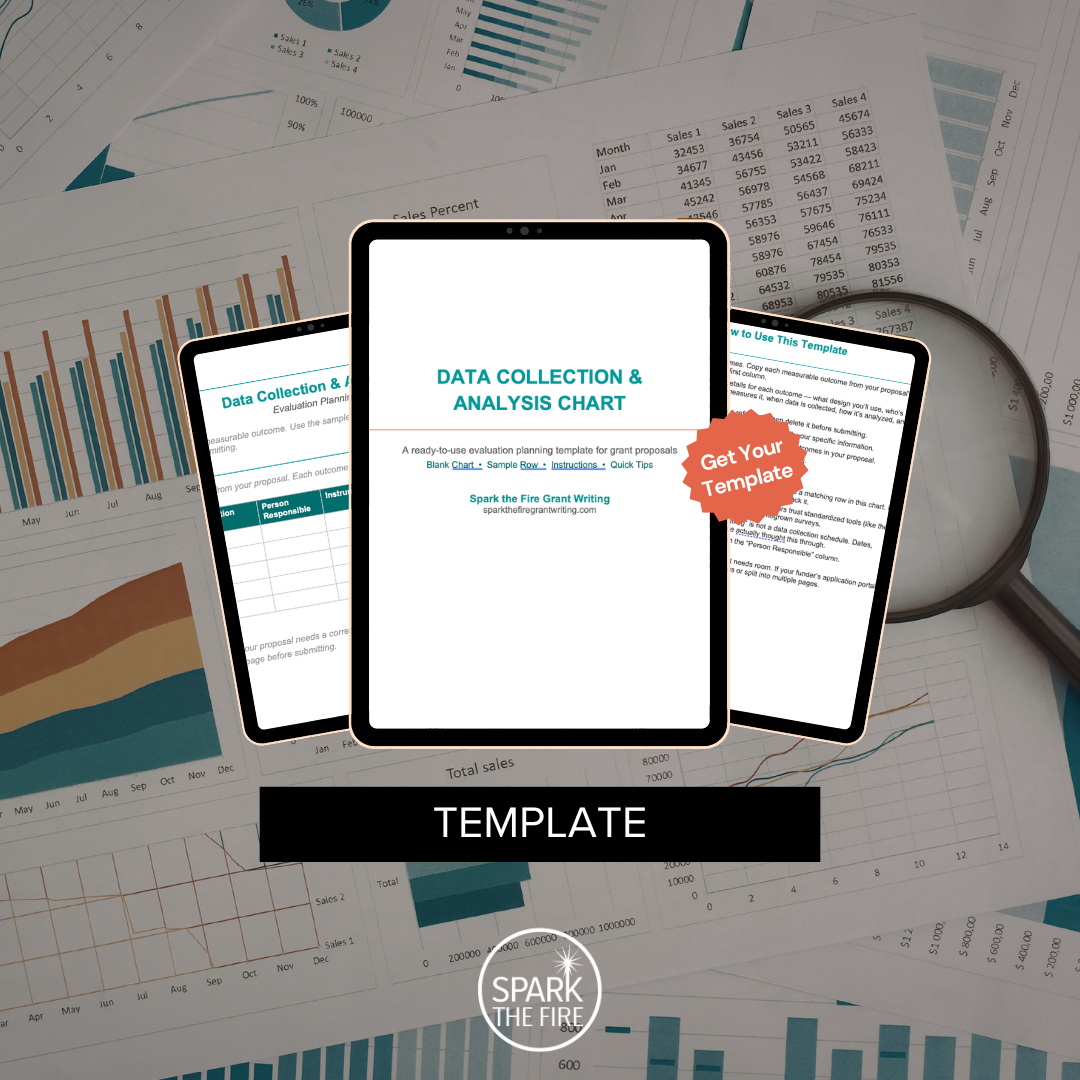
The Data Collection & Analysis Chart Template takes the guesswork out of evaluation planning. This landscape-formatted chart walks you through documenting every measurable outcome in your proposal — what you'll measure, who's responsible, what instrument you'll use, when you'll collect data, how you'll analyze it, and where you'll report it. One row per outcome. No outcome left behind.
It comes with a fully completed sample row so you can see exactly what "done right" looks like, plus Quick Tips that cover everything from choosing validated instruments to why "ongoing" is not a data collection schedule.
If your grant proposal has measurable outcomes (and it should), this chart is what reviewers are looking for.
What's included: Blank Evaluation Chart • Sample Completed Row • Step-by-Step Instructions • Quick Tips
You've written the whole proposal. You're exhausted. You click submit — and three days later you realize you forgot to include the evaluation plan. It happens more than anyone wants to admit.
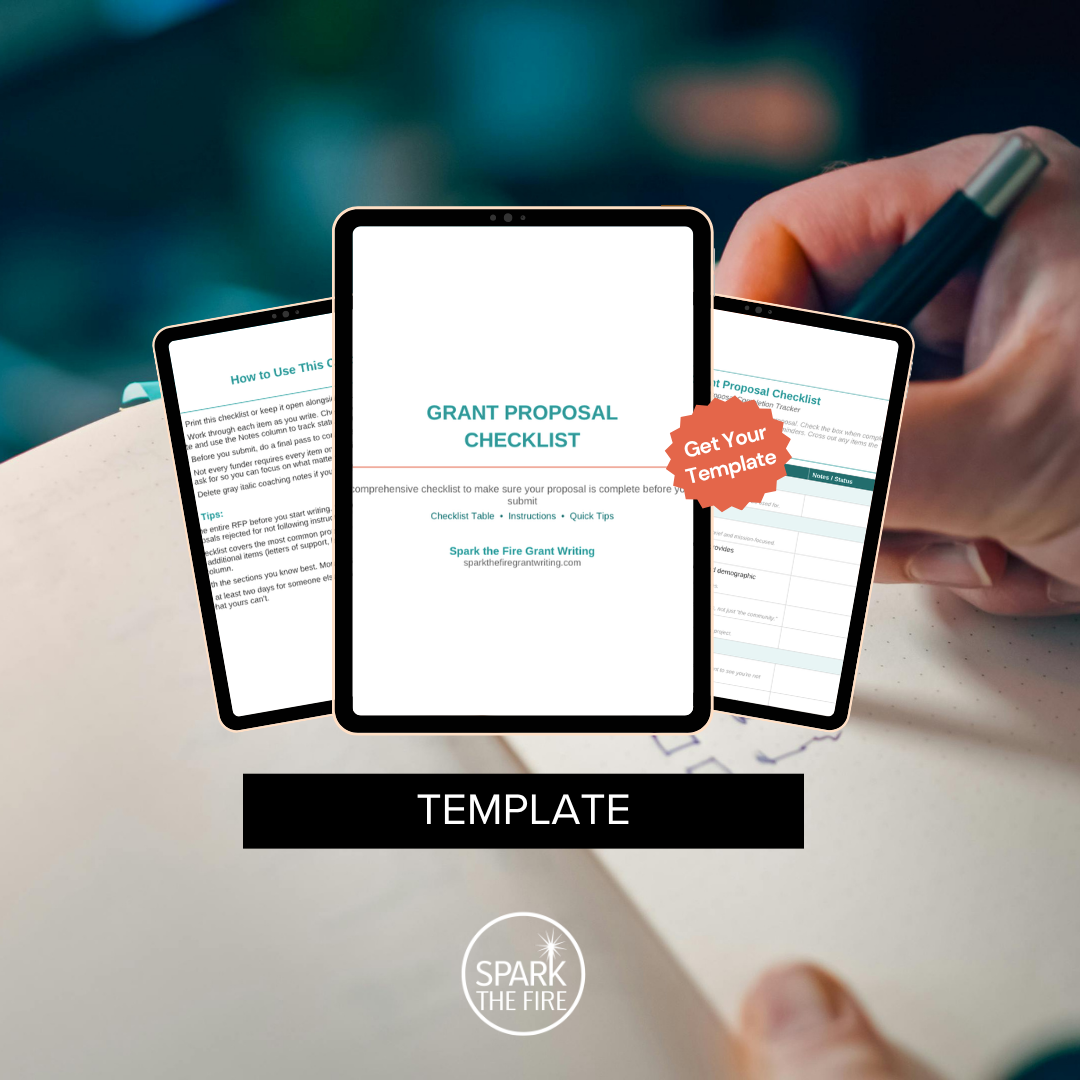
The Grant Proposal Checklist Template is your last line of defense before you hit send. It covers every major component funders expect to see, organized by section: Funding Request, Organization Background, Financial & Partnership Support, Need & Strategy, Project Design & Staffing, and Goals & Evaluation. Each item comes with a built-in coaching note so you know exactly what "done" looks like — not just that you need a needs statement, but what makes one actually strong.
There's also a Notes/Status column to track where you are on each item as you draft, so this works as a writing tracker, a final review tool, or both. It's the kind of thing that saves you from a facepalm at 11:58pm the night before the deadline.
E-Books
This E-book contains a proven strategy for meeting grant deadlines in a competitive grant writing landscape. In just 50 days, go from discovering a grant opportunity to submitting it two weeks early. A timeline of tasks and related tools is included.
The Spark the Fire team collected 34,767 grant application questions, removed duplicates, and sorted them by grant section. Don’t miss this chance to get this exciting resource so you can practice answering the questions and organize your answers. Plus, learn tips and tricks for answering the questions by garnering key phrases from the questions themselves.
AI isn’t just for writing proposals—it’s a powerful advantage for every stage of the grant process, from your first outreach to long-term funder relationships.
AI Prompts for Grant Writing is your essential guide to leveraging AI prompts for more than just crafting proposals. This e-book teaches you how to use AI strategically for:
🔹 Writing Stronger Grant Proposals – Generate clear, compelling narratives that align with funder priorities.
🔹 Building Relationships with Grantmakers – Use AI to craft thoughtful emails, introductions, and follow-ups that open doors.
🔹 Communicating with Funders – Develop polished progress reports, impact statements, and donor updates with ease.
🔹 Strategic Outreach & Networking – Create AI-assisted messaging that feels personal, professional, and persuasive.
With step-by-step guidance, tested AI prompts, and real-world examples, this e-book helps you save time, strengthen connections, and secure more funding. Whether you're a beginner or a seasoned grant writer, you’ll learn how to harness AI to streamline communication, foster relationships, and increase your grant success rate.
AI is the future of grant writing—are you ready to use it to your advantage?
👉 Download your copy today and transform the way you write, connect, and win grants!
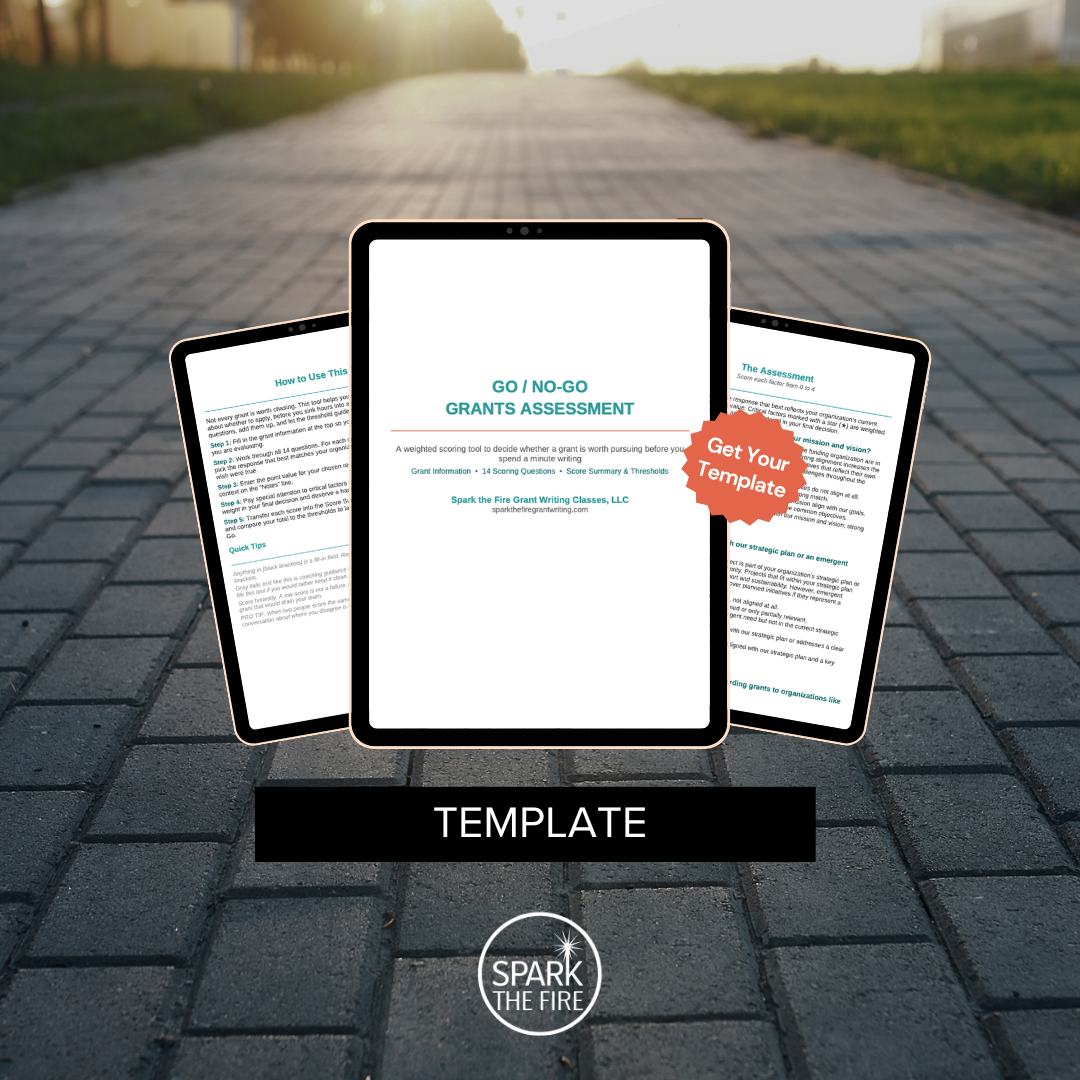
The Go-No-Go Grants Assessment is a practical, structured tool designed to help individuals and organizations evaluate grant opportunities with confidence and clarity. By breaking down key factors into a weighted scoring system, the tool simplifies complex decisions, ensuring your organization pursues only the opportunities that align with your mission, capacity, and strategic priorities.
This assessment includes 14 thoughtfully crafted questions that address critical aspects of grant evaluation, such as:
Mission Alignment: Does the funder’s mission resonate with your organizational goals?
Strategic Fit: Is the project part of your strategic plan or a new but essential priority?
Capacity Assessment: Do you have the expertise, staffing, and time to execute and report on the project effectively?
Financial Considerations: Does the potential funding outweigh the effort required to apply, and can you meet matching requirements or indirect cost recovery needs?
Each question is scored on a scale from 0 to 4, with critical factors weighted more heavily. The scoring system results in an overall numerical rating that provides clear thresholds for decision-making:
Go (40–56 points): Strong alignment and readiness—proceed with confidence.
Neutral (28–39 points): Consider carefully; there are risks that need mitigation.
No-Go (0–27 points): Significant misalignments; it’s better to focus on other opportunities.
The assessment is collaborative by design, allowing teams to discuss each factor and ensure no single person bears the full responsibility for the decision. By engaging in this process, your organization can save time, focus resources, and increase your chances of success with grants that truly fit your mission and capacity.
Whether you’re an experienced grant writer or new to the field, the Go-No-Go tool is an invaluable resource for making informed, strategic decisions about which grant opportunities to pursue.
Action verbs can take a grant proposal from good to great. Simply put, they convey action - which sounds competent, confident, and qualified.
Download this e-book full of more than 400 action verbs for grant writing, plus tips for how to incorporate them into each of the five sections of the grant proposal.
You’ll notice immediately how much more compelling your grant writing becomes.
State registration is a legal requirement for any organization or individual, including freelance grant writers, involved in raising charitable funds. Find out which states require you to register and exactly how to do it.