A Resource Every Grant Writer Should Know, or Be Reminded Of: GrantAdvisor.org

There's a resource every working grant writer should know about, and if you've heard of it before, consider this your reminder to actually use it: GrantAdvisor.org.
It's a free, anonymous, crowdsourced site where nonprofits and grant applicants review specific foundations, the way you'd review a contractor, except what's being rated is a funder's actual grantmaking process. It's been quietly running since 2017, and it has already produced one of the most concrete, measurable wins the grant sector has seen in years. Many working grant writers have never heard about it.
Table of Contents
What GrantAdvisor is, and the proof it already works
Nonprofits and grant applicants write anonymous reviews of specific foundations; foundations can register a Key Contact to respond publicly. You don't need to register to read or write a review, though registering lets you track your own reviews and see funder responses. A foundation's full profile only goes public once it accumulates five reviews, a detail that matters more than it sounds like it should, which I'll come back to.
In 2020, GrantAdvisor's own team, led by Kari Aanestad, launched a campaign called #FixTheForm. They pulled patterns directly from 2,500 GrantAdvisor reviews and found the field's worst, most common application pain points: surprise pop-up questions, no ability to save progress, applications that took 25 hours to complete for a $2,000 award. That data became the case for one specific, concrete ask: let applicants preview the full form before they start, instead of discovering the scope three hours into a session. More than 130 foundations adopted it. That's a real, measurable, sector-wide win, built entirely on the reviews people like you and me had already written.
A little of my own history with this
I've been aware of GrantAdvisor for a long time. Years ago I went down a research rabbit hole on #FixTheForm and found something else along the way: roughly 39 percent of the questions asked across a huge number of foundation applications are functionally the same question, worded differently. I collected that cache, removed the duplicates, and sorted what was left by grant section. That project became my e-book, Grant Questions E-Book: Yes, All of Them, 34,767 real application questions organized so you can practice answering them and pull the key phrases funders are actually asking for.
Foundant Technologies Webinar Advertisement
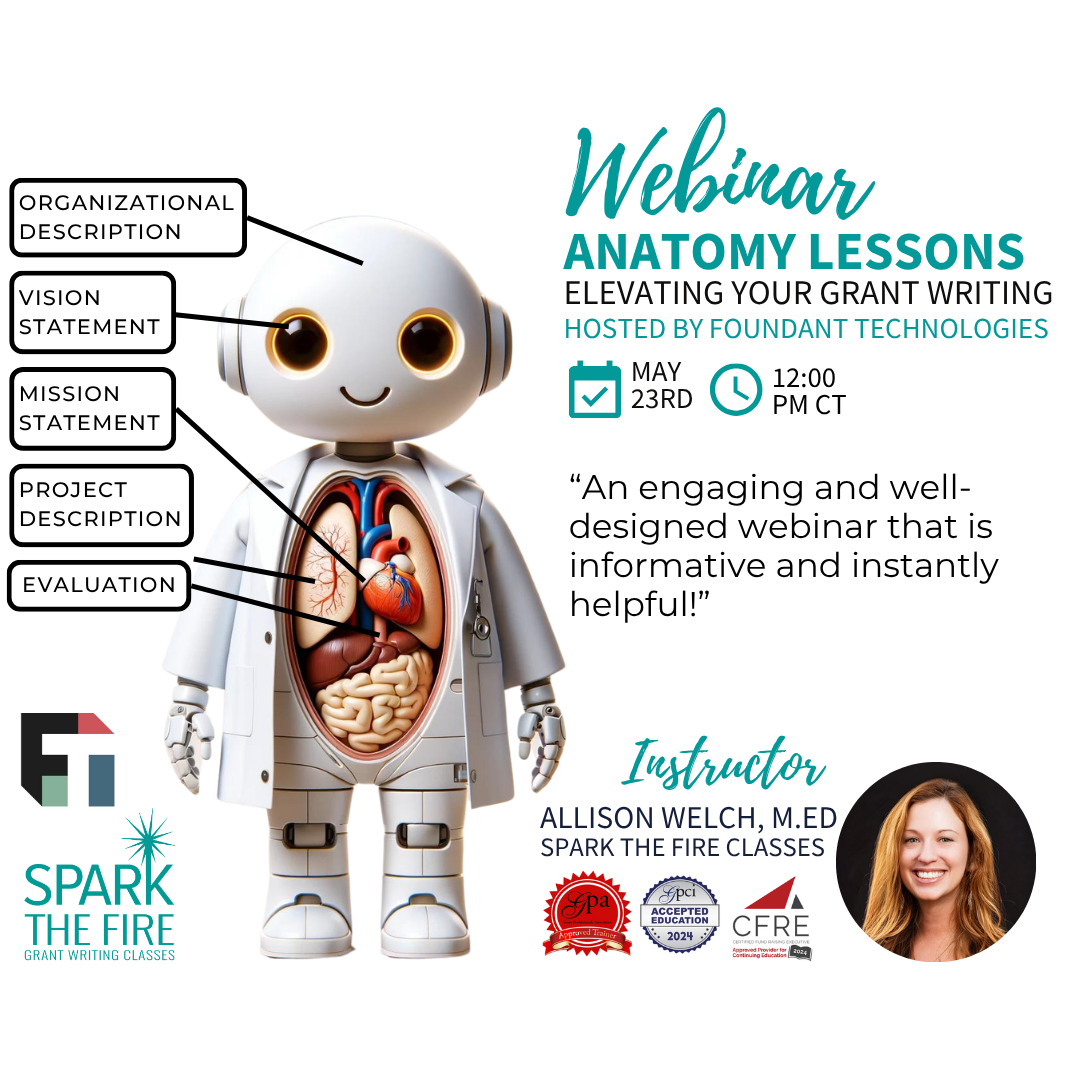
Foundant Technologies later invited me to present a webinar called "The Anatomy of Grant Writing," where I cited #FixTheForm's research. A participant in that webinar, Alorie Clark of DC Collaborative, asked what was coming next, which is how a few of us found out Foundant had commissioned a newer survey from Ephraim Gopin of 1832 Communications. That survey gathered input from more than 1,500 philanthropic professionals and has since produced a companion piece profiling a handful of foundations formalizing more responsive grantmaking. It's a fine, real data point. It's also a vendor-commissioned survey and article, not the work driving this movement. The work driving this movement is GrantAdvisor itself, and the people, like Kari Aanestad, who built #FixTheForm on top of it.
Where the real gap is
GrantAdvisor's own four-year recap, published in 2021 and never publicly updated since, put the totals at roughly 2,600 reviews covering 795 foundations across 49 states. Candid's current data suggests well over 100,000 active grantmaking foundations exist in the U.S. Even counting every foundation that's ever received a single review, that's well under 1 percent of the sector.
It's worse once you do the math on the five-review threshold. If all 795 of those foundations had public profiles, that would require a minimum of 3,975 reviews, not 2,600. The only way both numbers are true is if most of those 795 foundations never actually cleared the bar to be visible. Most of the foundations anyone has ever bothered to review are still invisible to the next applicant, because not enough people followed through past the first one or two.
That's not a reason to skip it. It's the argument for doing it now. Real, current examples from the live directory show what full participation looks like: Frey Foundation has 6 reviews, Best Buy Foundation has 7, M.J. Murdock Charitable Trust has 90, Nellie Mae Education Foundation has 168. The gap between six and ninety is entirely a function of how many people finished the job.
How you can help this week
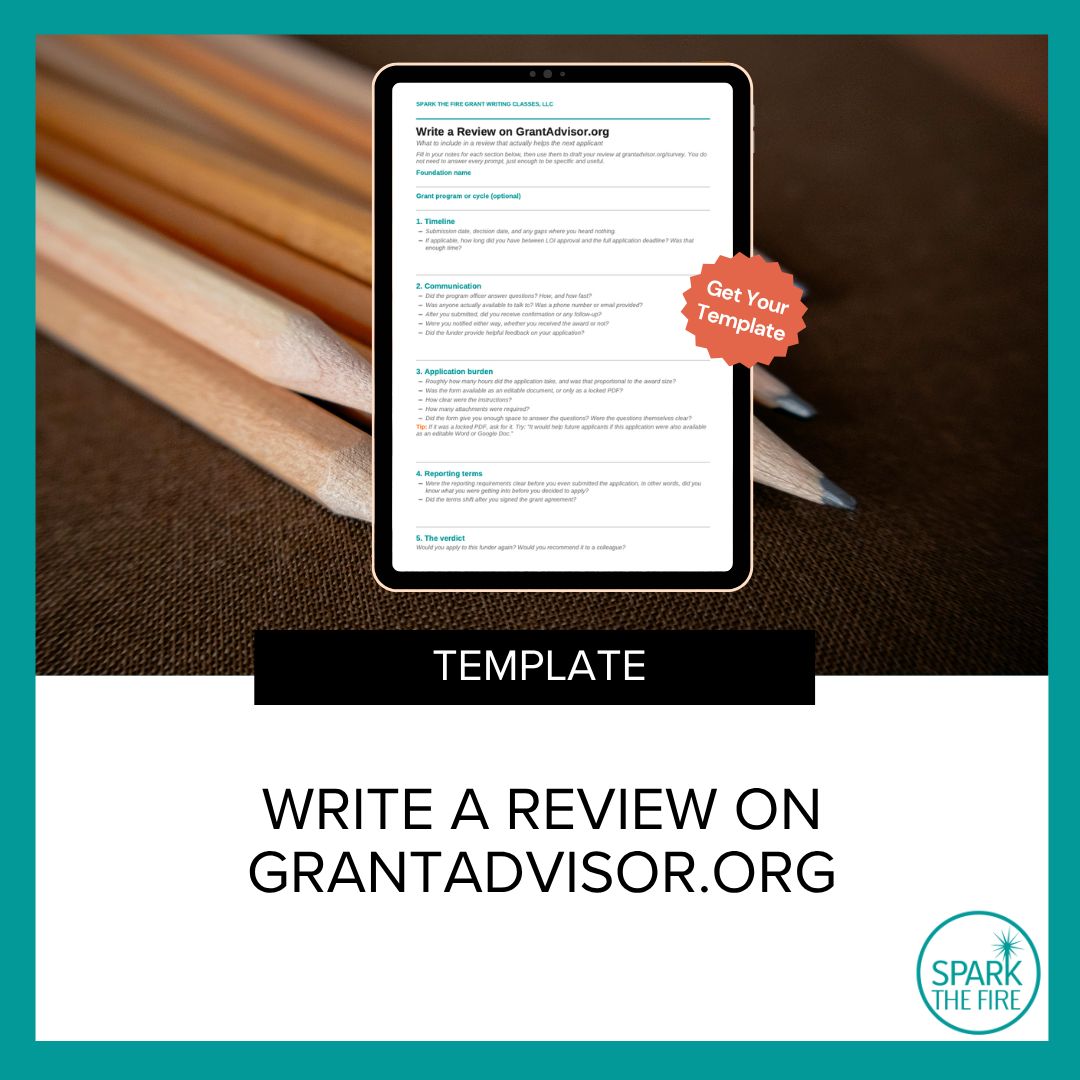
Write one review. Pick a foundation you worked with in the last year, good experience or bad, and spend fifteen minutes at grantadvisor.org/survey writing down what actually happened: the timeline, the communication, whether the reporting burden matched the award size, whether you'd apply again. Grab the checklist below if you want a structure to draft from.
Use it before you apply. Before committing hours to a new funder, check grantadvisor.org/funders first. Patterns across multiple reviews are a signal. A single bad experience with a program officer who has since left is noise.
Ask for the editable form, not just the preview. #FixTheForm's win got applicants a preview of the questions in advance. It didn't get most of us an editable draft. If your next application still arrives as a locked PDF, ask the funder for the Word or Google Doc version. It costs them nothing, and it's a smaller ask than it looks like. More on why that specific ask matters, including what it costs to work around it with AI instead, in an upcoming post.
Support the people actually doing the work. GrantAdvisor doesn't run on any vendor's marketing calendar. It runs on grant writers finishing the review they started. That's the whole ask.
The bigger picture
I've written before about where I think this needs to go structurally. My piece on building trust that includes argues that trust-based philanthropy quietly recreated an invitation-only gate, and that peer review, practitioners assessing practitioners, is how philanthropy gets its wisdom back along with its compassion. GrantAdvisor and #FixTheForm are a working, if incomplete, version of that idea already in motion. It only works after the fact, once enough people have had something worth reporting. A structural fix would build that same practitioner insight into the process earlier. Until then, the reactive version still works, but only if enough of us actually do it.
Frequently asked questions
Do I have to register on GrantAdvisor to write a review?
No. You can read and write reviews without an account. Registering is free and gives you a randomized, anonymous username, plus the ability to track your own past reviews and see how a foundation responds.
Is GrantAdvisor really anonymous?
Yes. Reviews aren't tied to your organization's name, and registered usernames are randomized rather than self-selected, so there's no obvious way for a funder to trace a review back to a specific applicant.
Why do some foundations not show up when I search?
A foundation's full profile only goes public once it accumulates five reviews. Below that threshold, the foundation may already exist in GrantAdvisor's system without a visible public page yet.
What if the foundation I want to review isn't on GrantAdvisor yet?
Write the review anyway. Every foundation's public profile started with someone writing the first one. GrantAdvisor's review form lets you add a new foundation if you can't find it in the directory.
Will a negative review hurt my chances with that funder later?
The entire design of the site is built around anonymity so that this isn't a risk. Still, write reviews that are specific and factual rather than identifying; skip details like exact project names, award amounts, or community specifics that could narrow down which applicant you are.
How is this different from paid databases like Candid or Instrumentl?
Candid and Instrumentl sell structured, objective data: 990 filings, giving history, deadlines, contact information. GrantAdvisor is free and collects something those tools don't: firsthand, subjective accounts of what it's actually like to apply to and work with a specific funder.
Is #FixTheForm still active?
The 2020 campaign produced its results years ago, and I don't have visibility into what, if anything, is currently running under that name. GrantAdvisor itself is still active and collecting reviews regardless of any single campaign's status.