Prospect Research Course
Navigating Grant Opportunities
The right funder is half the proposal.
-
This course is for two kinds of people. The first is anyone inside an organization that wants to diversify its funding through a deliberate, strategic grant plan instead of chasing whatever opportunity floats by. The second is the consultant who wants to build a complete, comprehensive prospect research plan for clients and deliver it with confidence. If you're tired of scattershot funder searches and want a repeatable system for deciding who to approach and how, you're in the right place.
-
Allison Welch, M.Ed., GPC, founder of Spark the Fire Grant Writing and creator of the Certificate in Grant Writing. Allison has 25+ years of experience and is one of approximately 30 GPCI-approved trainers nationally. She's also a grant reviewer, so she teaches from inside the room where funding decisions get made, not just from the applicant's side of the table. She's a columnist for Candid and the author of the forthcoming book The “Of Course” Factor: A Guide to Meaningful Grant Writing (October 2026). Learn More
-
By the end, you'll know how to:
Create and implement a strategy for finding and approaching the full range of funder types: foundations, corporations, government, tribal entities, clubs, and associations
Build an organizational strategy, calendar, and work plan that keep your research organized and your pipeline moving
Qualify funders so you spend your time on the ones most likely to say yes
Turn scattered funder searches into a repeatable system you, or your client, can run again and again.
-
The course is built around six videos that walk you through prospect research from strategy to execution. You'll learn to build a grant calendar that keeps your pipeline on schedule, then research and craft an approach for each type of funder you'll meet: foundations, corporations, government, tribal entities, clubs, and associations. Each one rewards a different strategy, and you'll learn to read those differences. Peer discussions let you compare notes with other writers along the way, and an assessment quiz helps you confirm what's landed before you put it to work. Learn More
-
You can start the moment you enroll. The course is six hours of instruction delivered as recorded videos, so you watch on your own schedule and revisit any lesson whenever you need it. Learn More
-
The course is $247. You can take it on its own or bundle it with the Certificate and other courses to save. Learn More
It starts with a spark, the desire to fund the work that matters. This course helps you turn guesswork into a strategic prospect research plan you can run for your own organization or your clients, built with clarity, focus, and follow-through.

Who Will Thrive in This Course?
Mastering Grant Prospect Research is designed for grant professionals and organizations who want to stop guessing and start building a real strategy for finding and approaching funders. Whether you manage grants in-house or write for clients, the course gives you a repeatable system for researching foundations, corporations, government agencies, tribal entities, clubs, and associations. You'll learn to qualify the right opportunities, build a working grants calendar, and craft an approach tailored to each funder type. Along the way, peer discussions bring other perspectives into the process so you're not figuring it out alone.
Grants Managers
You're writing grants or managing the funding pipeline for your organization, but your approach to finding funders has been reactive: chasing deadlines, following tips from colleagues, or applying to whatever pops up. You're ready to replace that with a strategic system that keeps your pipeline full and focused on the right opportunities.
Consultants and Freelancers
You write for clients, and you know that strong prospect research is the foundation of everything that follows. This course helps you build a comprehensive research plan you can deliver as a standalone service or fold into every client engagement, making you more valuable and more efficient.
Certificate in Grant Writing Graduates
You learned the full grant lifecycle in the Certificate. Now you want to go deeper on the research side: building a grants calendar, qualifying funders by type, and creating an approach strategy that sets every proposal up for success before you write a word.
Leaders Building a Grants Strategy
You're an executive director, development director, or board member who wants to diversify your organization's funding but isn't sure where to start. You don't need to become a grant writer. You need to understand how strategic prospect research works so you can lead the effort or hire for it wisely.

Course Curriculum
-
This is where we lay the foundation, everything you need to understand before you start writing:
Discover why people give, and how to use that knowledge to write proposals that speak to both a funder's head and heart.
Learn what a grant writer actually does (hint: it is way more than writing) and how to gather the information you need before you type a single word.
Get familiar with common grant application formats and why following the rules isn't optional.
-
This is where your proposals start to come alive. You will learn to think like a storyteller and a strategist:
See how the five sections of a grant proposal map to a classic story arc, and how storytelling turns your proposal into a narrative funders can follow and connect with.
Use empowering, person-centered language that honors community voices and avoids savior narratives or deficit-based framing.
Learn how the Grant Framework helps you build your proposal one piece at a time.
Use the Five-Filters approach to prospect research to uncover funding opportunities you would never find with a single search.
-
This is where you start building the first real section of your grant proposal:
Understand where your organization falls in its lifecycle, and how to position it for funding at any stage of development.
Tell your organization's story in a way that weaves together mission, vision, history, programs, and partnerships into something funders connect with.
Show funders your organization has what it takes by highlighting governance, leadership, staffing, infrastructure, and strategic planning.
Understand how foundations work, including the different types, and how to find and approach them as potential funding sources.
-
This is where your proposal starts to build real momentum:
Understand what a community insight statement is, what belongs in it, and why it sets the foundation for everything else in your proposal.
Use a mix of external research, internal data, and lived experience to describe community conditions in a way that is grounded, credible, and compelling.
Learn how to build tension and urgency in your writing, showing funders why this issue matters right now, without jumping ahead to solutions.
Research corporate grantmakers and develop strategies for approaching them, including sponsorships, in-kind support, and cause-related marketing.
-
This is where the numbers tell your story:
Determine how much to request from a specific grantmaker, based on their guidelines, your total project costs, and a diversified funding strategy.
Build a clear, balanced project budget that ties every expense directly to your project's activities and outcomes.
Write a budget narrative that shows your math, justifies your costs, and demonstrates financial stewardship and sustainability.
Navigate government grant opportunities, including how to search Grants.gov, register to apply, and understand federal funding structures.
-
This is where your proposal gets its heartbeat:
Write a project description that walks the reader through your participant's experience from first contact to completion, so the funder can see your project in action.
Draft a primary goal and three SMARTIE objectives that are specific, measurable, and grounded in inclusivity and equity.
Build a work plan and timeline that shows exactly how your project will be executed and who is responsible for each piece.
Explore tribal grantmakers, clubs, and associations as potential funding sources, two categories many grant writers overlook.
-
This is where you bring it all home:
Understand the purpose of evaluation in a grant proposal, and how to design an evaluation plan that is right-sized for your project's scope, budget, and capacity.
Choose the right evaluation tools and data collection methods to measure whether your project is achieving what it set out to do.
Write the evaluation and closing sections of your grant proposal in a way that demonstrates accountability, learning, and long-term vision.
Build a system for tracking your prospects, deadlines, and communications so nothing falls through the cracks.
-
This is where you cross the finish line:
Know what organizational documents grantmakers typically request and what they are actually looking for when they review them.
Understand the key financial documents (audited statements, IRS Form 990, balance sheet, and organizational budget) and what each one communicates to a funder about your organization's health.
Get your supporting attachments organized and ready so you are not scrambling when an application deadline hits.
Learn how to communicate with grantmakers, navigate the review process, and build the kind of relationships that lead to sustained funding.
Understand the ethical standards that protect you, your organization, and the integrity of this work.
Additional Course Features
Your success doesn't stop at completing the modules. These tools and supports are here to help you stay connected, organized, and confident as you grow as a grant writer.
📞 Office Hours by Appointment
Schedule one-on-one time with Allison for personalized guidance and feedback using a simple scheduling link.
🔥 Grant Writer Community
Join an active community of grant writers for ongoing support, networking, and professional connections.

Allison Welch, M.Ed., GPC, has spent more than 25 years on every side of the grant table: as a writer crafting the asks, as a trainer teaching others to do the same, and as a reviewer deciding which proposals get funded. That last role is the one that sets her apart. When you learn from Allison, you're learning from someone who has actually sat with the scoring rubric and watched what separates a funded proposal from a near miss. She's the founder of Spark the Fire Grant Writing and one of approximately 30 GPA-approved trainers in the country.
She built this course on a simple conviction: strong grant writing is a craft anyone can learn, not a knack you're born with. From the reviewer's chair, she's seen exactly what a fundable proposal looks like, and she's distilled it into a framework you can follow from prospect research all the way through post-award reporting. In the Certificate course, she walks you through the full grant lifecycle and has you build a real proposal as you go, so you finish with both a polished application and the skills to write the next one on your own.
Allison is also a columnist for Candid, an adjunct professor at several colleges, and the author of the forthcoming book The “Of Course” Factor: A Guide to Meaningful Grant Writing (October 2026). Her teaching is warm, candid, and refreshingly free of hustle. She's far more interested in helping you do meaningful work well than in selling you shortcuts.
Meet Your Instructor
In Their Own Words
-
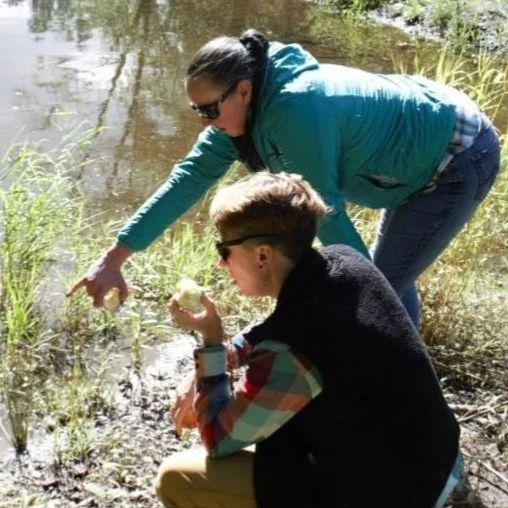
![Grant writer and biologist studying river]()
Increased Grants by $274K in 1 Year
"In the last 12 months, my department [at the Confederated Tribes of the Chehalis Reservation] received almost $274,000 in grants! This funding is a considerable increase since I took your class when my department did not have any grant-funded projects. Not only am I finally getting organized, but it was a pleasant surprise to be able to quantify how my grant proposals have paid off, especially since that is close to 45% of my department’s annual budget!”
- Hope Reiden -
![Photo of Claire Oatey]()
Tangible and Actionable
"Thank you for your excellent facilitation and teaching skills over the course of seven grant writing workshops. The practical framework, examples, and time to actually practice what was learned made your workshops both tangible and actionable — which is key for busy professionals. Looking forward to partnering in the future."
— Claire Oates, Community Foundation of North Central Washington -
![Grant writer finds dream job]()
This is My Dream Job!
"I wanted to share some good news with you - I just accepted a grant writer job with the American Cancer Society! It's a great career opportunity for me! This is my dream job!"
- Lee Avallone
Today, she is the Senior Grant Writing Manager -
![Smiling grant writing student with brown hair.]()
Secured $500K in First Year
"After completing your course last December, I have written several successful grants, securing over $500,000 for our organization. It has been exciting and rewarding to move into this aspect of non-profit work and build new skills."
- Annie Dimitras -
![Veronica Depotty headshot]()
Challenged Me — In the Best Way
"This course challenged me — in the best way — to carve out time I normally wouldn't have taken to develop a program idea my team has been envisioning for a while. The continued feedback and guidance throughout the process were incredibly valuable. Thanks to this course, I now have a well-crafted draft I'm confident presenting to my manager and director."
— Veronica DePotty, MSHDA Housing -
![]()
Promoted in One Month
Completed the Spark the Fire Certificate in Grant Writing course, and within one month of finishing the course, she was promoted to Grants and Communication Specialist at Evergreen Goodwill of NW Washington.
- Nancy Leal -
![]()
I Feel So Much More Confident!
“This was a really informative, educational course. Allison took the time to give really thorough feedback and even set up a meeting with me to give me guidance on making my proposal more cohesive. I have already been applying what I learned and feel so much more confident with the proposals I am submitting. I highly recommend this course!”
- Charissa Adams -
![]()
Inquisitive Feedback
“I started this course as a nonprofit employee who had picked up grant management as a small component of my day-to-day work. Over the last year, grant writing has become my primary job. This course was my first actual training in this field, and it has been invaluable, as has the detailed, patient, and inquisitive feedback. I so appreciated the opportunity to learn at my own pace and ask questions along the way, and I'll be revisiting my coursework regularly as I continue to grow my career as a grant writer.”
- Annika Bennett -
![]()
I Cannot Say Enough Good Things About This Course!
“Excellent course! I’d been searching for something like this for years. After learning some skills on the job, it was great to confirm what I knew—and discover new areas I hadn’t yet explored. Having all the freelancing info organized in one place, with checklists, reusable materials, and instructor feedback, was invaluable. I also enjoyed connecting with other grant writers during the cohort. I can’t say enough good things about this course!”
– Carrie Care