How to Build Your Grant Writing Portfolio

Having a writing portfolio of grants is essential to winning a new job or new clients.
A student recently reached out to me with a question I hear often. She was preparing for her job search after earning her Certificate in Grant Writing, and she knew employers and clients would ask for writing samples. She wanted to know how to build a portfolio before landing her first job or client.
My answer is to build the portfolio on purpose. Short, local grants let a new grant writer produce real samples in weeks rather than months, and a clear written agreement keeps that early work from turning into an open-ended favor. Here is how I approach it.
Table of Contents
Decide between niche and general
Before choosing which grants to write, it helps to decide what kind of grant writer you want to be known as: a grant writer who specializes in a niche, or a generalist. Both paths work, but they build different reputations.
Niche means choosing a field where you already have a background, such as the arts or education. The advantage is word of mouth. People start to think of you as the person who writes grants for arts organizations, and they send clients your way.
I do this myself. When an arts organization asks me to recommend a grant writer, and I know a Certificate graduate who loves writing for arts organizations, that graduate is the first person I think of. I also think first of the people I've interacted with most recently in the Spark the Fire community. They're the ones at the top of my mind, which is one more reason showing up in the community pays off.
You also get to know the funders in your field, including their guidelines and application instructions, so when you approach the same funder for a new client, the learning curve is much shorter. If you bill by the hour, that saves your client money. If you price by the project, you finish faster and earn more for the time you put in.
General works best when it is anchored to a place. Instead of learning every funder in one field, you learn the go-to funders who give in your city, county, or region, which gives you the same advantage a niche writer gets from knowing a field. Every project teaches you something new, and over time you become known as the grant writer in your community.
Either way, aim for range in your portfolio. If you go general, the quick wins below give you variety across funder types. If you go niche, use the same three sample types, but stay inside your field: an arts writer might look to the local arts agency, the community foundation's arts fund, and a corporate sponsor of local arts events; an education writer might start with classroom mini-grants and the Dollar General Literacy Foundation. The next two sections show how.
What a starter portfolio needs
You don't need a thick binder. In my post on creating grant writing samples that win jobs and clients, I recommend three samples: one government grant proposal, one private foundation grant proposal, and one corporate grant proposal. Together they show a potential client that you can adjust your approach and writing style to different funders and the way each one makes decisions.
A sample doesn't have to be funded to earn a place in your portfolio. A clear, well-built grant proposal that was declined still shows how you think, how you organize information, and how you write. I'll admit, though, that funded proposals are far better. From my own experience, it's uncomfortable when someone asks whether a sample was funded and the best answer you have is that you included it to show range. That's the reason to start with grants you have a realistic chance of winning.
The quick wins below are organized by those three sample types, so you can fill each slot deliberately.
Quick wins that fill each slot
The need for help is real. According to the National Council of Nonprofits, 92% of charitable organizations operate on less than $1 million a year, and 88% spend less than $500,000. Organizations that size often run on a small staff or volunteers, which makes them natural partners for a new grant writer.
By quick wins, I mean grants with short applications and local decision-makers. The writing goes fast. The decision may not, since some funders take months to announce awards. If you want results to point to this year, look for funders with short review cycles and check when they notify applicants before you start.
Government sample: fire departments and neighborhood grants
Fire departments almost always need equipment, and many rural departments are eligible for Volunteer Fire Assistance grants. These are federal funds passed through state forestry agencies for wildland firefighting equipment, and the applications are short.
The funding model is a useful lesson. These grants are typically 50/50 matches paid by reimbursement. In Virginia, for example, a department approved for a $1,500 grant has to spend $3,000 first and is reimbursed half afterward. Explaining a match and planning around reimbursement are skills your future clients will need from you.
One caution: large federal fire grants are much more demanding, with long applications and strict requirements. Save those for later in your career.
Many cities and counties also run neighborhood grant programs for grassroots community projects. Seattle's Neighborhood Matching Fund is a long-running example. Its Small Sparks Fund awards up to $5,000 on a rolling basis for projects like neighborhood clean-ups, block parties, and community art, and the community matches each award with volunteer time, donated materials, professional services, or cash. In King County, Washington, the Alan M. Painter Grants fund community projects in unincorporated areas; the 2026 round supported more than 30 projects with a total of $90,000. Check your city's neighborhood or community services office for a similar program. These grants also teach you how to document an in-kind match, a skill larger funders often expect.
Foundation sample: classrooms, community foundations, arts funders, and co-ops
Many school districts have an education foundation that offers mini-grants for teacher-led classroom projects. Awards are often $500 to $1,000, and the applications are short and sweet. If you have children in school, start with their teachers and ask whether they have a project that needs funding. The teacher is the applicant and signs the application; you help write it. Your own kids get to benefit, too.
Next, study your local community foundation. If it accepts grant applications, review its list of grantees, then compare that list with the organizations in your community. Look for organizations the foundation isn't already funding whose missions clearly fit its priorities. Fit comes first. An organization outside the foundation's priorities is not a quick win for anyone.
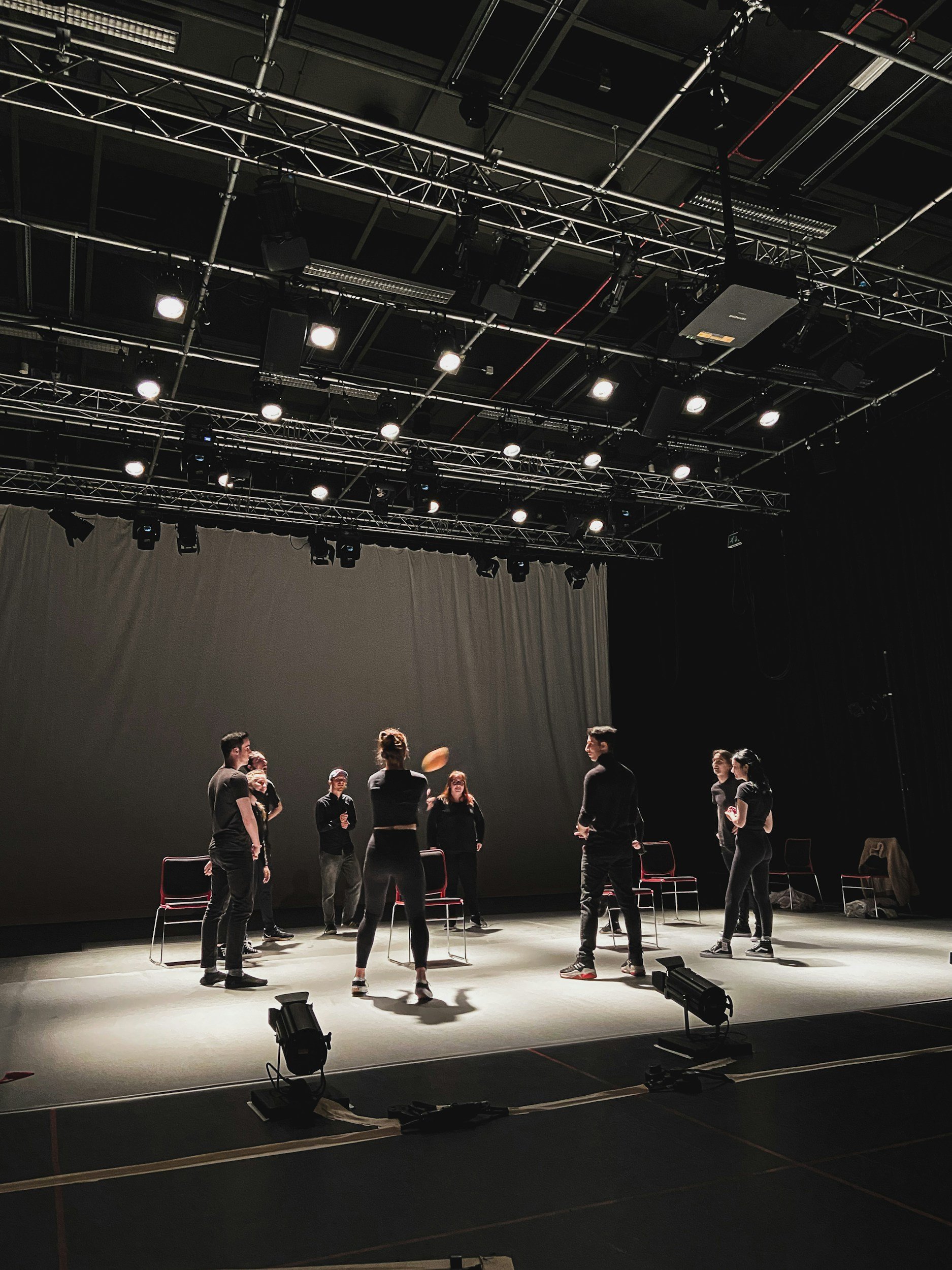
Arts funders that offer project grants are another good fit. They're looking for public benefit: art the community can experience. The applicant often doesn't need to be a 501(c)(3). A community group can qualify by putting on a performance that is free or low cost for the public, particularly one that shares a range of cultures with the community. That opens the door to working with a dance troupe, a community choir, or a cultural festival that has never had help with an application. Read the eligibility rules closely, since some arts funders require a fiscal sponsor for groups without 501(c)(3) status.
In rural areas, check whether your electric cooperative runs an Operation Round Up program. Co-op members round their electric bills up to the nearest dollar, and the spare change funds local grants. One South Dakota cooperative awards $500 to $3,000 twice a year, and its recipients have included fire departments, schools, youth clubs, and municipalities.
Local credit unions are member-owned cooperatives too, and some give back through small community grants. One Texas credit union for educators, for example, offers classroom mini-grants for specific items teachers need to engage their students.
Corporate sample: national companies with local giving
The Firehouse Subs Public Safety Foundation funds equipment for first responders through a fully digital application that opens quarterly, with requests recently capped at $40,000. Departments that receive a grant are asked to wait three years before applying again, so ask about the department's history before you start.
Walmart Spark Good Local Grants are awarded by individual Walmart stores, Sam's Clubs, and distribution centers, in amounts of $250 to $5,000. Before applying, an organization needs a Spark Good account and verification through Walmart's partner, Deed. For a small organization, that setup can be the hardest part, and helping with it is part of the value you bring.
The Dollar General Literacy Foundation funds literacy programs at schools, libraries, and organizations within 15 miles of a Dollar General store or distribution center. Its 2027 grant cycle opens in January 2027, which leaves time to line up a school or library partner now.

Clubs and associations provide grants to local organizations.
Local banks and service clubs such as Rotary, Kiwanis, Lions, and Zonta, whose clubs focus on women and girls, also fund community projects, usually with short applications. Some don't advertise widely, so a phone call or a visit to a club meeting is often the fastest way to learn what's available.
Pro bono work without the slippery slope
A fair question at this point is whether all of this work is unpaid. With little or no experience, pro bono work may be the only way to get started. That's why I keep pointing to short applications: they let you build samples without giving away months of your time. Your portfolio needs at least one full-length grant proposal too, though, because employers and clients want to see that you can carry a complete narrative, budget, and evaluation plan from start to finish. Once a few short applications are behind you, take on one longer grant proposal under the kind of agreement described below.
Volunteering is a slippery slope. Once an organization sees you as its volunteer grant writer, that relationship is hard to change. Treat pro bono work as a defined project with a clear purpose, which is building your writing portfolio, and say so up front.
Then put it in writing. Your agreement should include:
Permission to use the work as a writing sample. You can change the organization's name and other identifying details for privacy. My writing samples post walks through how to adapt a grant proposal without losing its impact.
The scope: which grant proposal you will write and what the organization will provide.
A clear end date.
What working with you looks like after that date, including how you charge, so the organization knows how to hire you if it wants to keep going.
One arrangement to decline is writing for free now and getting paid only if the grant is funded. The Grant Professionals Association Code of Ethics prohibits finder's fees, commissions, and percentage-based pay tied to grants, and it defines a commission as a fee paid when a grant is awarded. Pro bono work with clear limits is ethical. Pay that depends on the award is not.
Watch how you describe this work in public, too. Never put "volunteer" on your LinkedIn profile, or everyone will expect you to volunteer. Describe the project itself: the organization, the type of grant, and your role. My Business of Freelance Grant Writing course covers what comes next, including finding clients and pricing your work.
If local connections are hard to come by, the pro bono matching platforms in my post on how to get grant writing experience without working for free connect grant writers with organizations remotely. The same agreement applies.
Learn faster by reviewing proposals

Reviewing grants is a great way to get experience.
Writing grant proposals is one way to learn what works. Reading them in bulk is faster. When you score a stack of applications against a rubric, patterns show up quickly: which ones make their case clearly, and where the others lose the reader.
I covered one of my favorite options, volunteering as a reviewer with the Unfunded List, in How to Get Grant Writing Experience Without Working for Free. Closer to home, check with your United Way and community foundation. Many recruit community members for their review committees, some say no particular experience is needed, and a typical assignment is scoring a handful of applications with a provided rubric. You'll also meet the people who make funding decisions in your area, which matters for anyone building a regional practice.
FAQ
Do my writing samples need to be funded grants?
No, but funded samples are far stronger. A well-organized grant proposal that was declined still shows how you write and think, so it can hold a place in your portfolio while you build. Swap it for a funded sample as soon as you have one.
Can I write a grant for free and get paid if it's funded?
No. The Grant Professionals Association Code of Ethics prohibits commissions and percentage-based pay tied to grants. A pro bono project with a defined scope and end date is fine. A fee that depends on the award is not.
How many writing samples do I need?
Three is a strong start: one government, one private foundation, and one corporate. Range matters more than volume.
Can I use a grant proposal I wrote for a client without asking?
No. The grant proposal belongs to the organization. Get written permission, ideally in your agreement before you start. Then change the organization's name and identifying details and remove the financial figures.
How should pro bono grant writing appear on LinkedIn?
List it under Experience, not Volunteering. Create one entry for your grant writing practice, set the employment type to Freelance or Self-employed, and describe each grant proposal in a line: the type of organization, the funder type, and your role. Leave out the word "volunteer."
How long does it take to hear back on a small grant?
It varies by funder. Walmart Spark Good Local Grants, for example, can come back with an answer in a few weeks, while many local funders review applications quarterly or twice a year. Check the notification timeline before you choose which grants to write.
The grant proposal you write in my Certificate in Grant Writing course can become one of your first portfolio pieces, built with feedback along the way.
Want more grant writing guidance in your inbox each week?
Cheering you on!
Allison